ShanghaiDoctor - Where China's Healing Wisdom Shapes Modern Medicine

Update time:2026-08-27Visits:2168
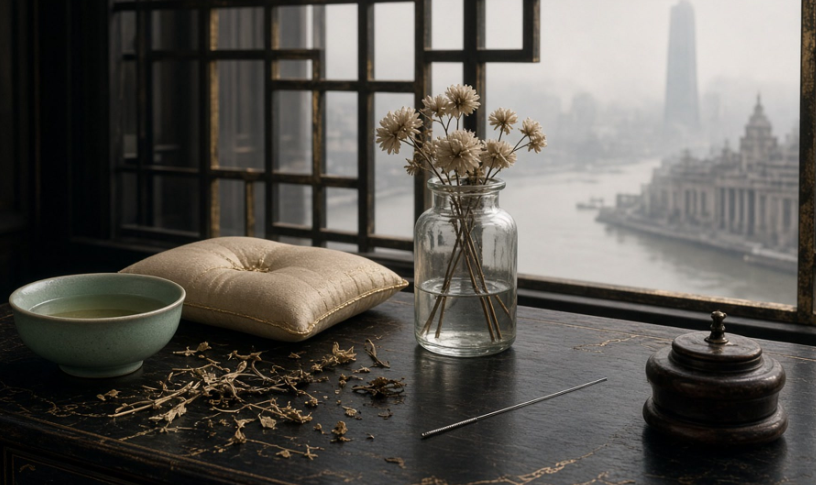
What residents actually use are large public teaching hospitals. You take a number. You may have blood drawn. You may be sent for imaging. The pharmacy decocts the formula, seals it and, in many cases, will send it to your hotel. Follow-up often happens on a phone app. The city’s habit is not to make Chinese medicine look older. It is to run pattern diagnosis inside a modern hospital, and to keep a record.
If you want care you can follow, adjust and take back to a named department — rather than a single theatrical encounter — start with those hospitals.
ShanghaiDoctor.cn interviews physicians across this city. Our working view is historical, not mystical. Shanghai is where modern medicine in China concentrated early, and where Chinese and Western practice spent the longest time on the same streets. After the port opened, missionary hospitals, Chinese-founded hospitals, clinics serving foreign communities, and physicians who had moved here from other provinces shared one map. Chinese medicine in this town could not speak only to itself. It had to live next to people who asked for a laboratory result, a timeline, and a pharmacy that could fill the same script again the following week.
What it is used for — and what it is not
In public TCM hospitals here, Chinese medicine is most often used for:
• Chronic or functional problems: insomnia, indigestion, allergic rhinitis, irregular periods, lingering fatigue.
• Pain and rehabilitation: neck and low-back pain, sports injury, stiffness after surgery.
• Support during cancer treatment: sleep, appetite, some treatment effects. Not as a replacement for surgery, radiotherapy or standard oncology.
• Selected skin and gynaecological complaints.
• Prevention and constitution care. The local phrase is zhi wei bing. In practice it means a structured look at sleep, digestion, cold or heat intolerance, and seasonal strain before there is a neat billing code.
It is usually the wrong first move for major trauma, a surgical abdomen, serious infection, a new stroke-like deficit, or unexplained bleeding and weight loss. A competent physician in these hospitals will read the work-up you already have, order more if needed, or send you on. Using TCM as a substitute for all modern medicine is not how these institutions work. It is also unsafe.
Western readers reasonably ask about evidence. The honest answer is stratified. Acupuncture has a substantial literature, strongest in some pain and nausea settings, thinner elsewhere. Individualised herbal formulas are harder to study as a single product; the quality of evidence varies. “Whole-person regulation” is a clinical claim, not a completed proof. What Shanghai’s mainstream hospitals offer is not a certificate that every prescription meets a gold-standard trial. It is a setting that accepts tests, follow-up, and other specialties in the same building.
Do not arrive expecting a twenty-minute family-medicine consult in a closed room, with a full lecture on mechanism. Outpatient clinics in large Chinese hospitals are faster and more crowded. The questions, though, are often more bodily than a Western history: how you sleep, how you eat, how you stool, whether you feel the cold easily, how your mood has been.
A typical first visit runs as follows.
1. Registration and check-in; sometimes blood pressure and a short form.
2. History, tongue inspection, and pulse reading at the wrist.
3. Further tests if the physician wants them.
4. A herbal formula, a patent medicine, and/or a slip for acupuncture, tuina (medical massage) or cupping.
5. Payment, the pharmacy or treatment room, and a return date.
Formulas commonly run seven to fourteen days, then change. Hospital-decocted pouches keep in a refrigerator for about a week. First visits should be in person. Apps are for follow-up.
If the doctor uses words such as qi, pattern (zheng) or constitution, treat them as a sorting system for symptoms — sleep, bloating, cold intolerance, tongue coating — not as a demand that you accept a cosmology before you can be treated. It is fair to say: “Please tell me in functional terms what we are trying to change, and what we will look at when I come back.”
A shopfront “imperial” clinic is easier to photograph. A public Grade A tertiary hospital is easier to hold responsible. Credentials, pharmacy supply, records and a department to return to matter more than décor.
Hospital | Where | Come for |
Longhua Hospital | 725 Wanping South Road, Xuhui; also Pudong | Integrative oncology support, digestion, orthopaedics, TCM surgery. The only TCM hospital in the city’s public international medical-tourism pilot. |
Shuguang Hospital | West: 185 Pu’an Road, Huangpu. East: 528 Zhangheng Road, Pudong | Liver and kidney disease, acupuncture and tuina, some acute combined care. Lineage to 1906. |
Yueyang Hospital of Integrated Medicine | Ganhe Road, Hongkou; specialist clinic on Qinghai Road, Jing’an | Rehabilitation, acupuncture, dermatology, gynaecology, anorectal surgery. Built as an integrated hospital. |
Shanghai Municipal Hospital of TCM | 274 Zhijiang Middle Road, Jing’an; other campuses | Insomnia and headache, endocrine support, paediatrics, prevention clinics. Early to online prescribing and home delivery. |
Affiliated to Shanghai University of Traditional Chinese Medicine. Founded in 1960 as one of the country’s first dedicated TCM clinical bases. Come for long chronic-disease management, recovery after surgery, or cancer support when you want one institution that can read both sets of notes.
If your scepticism is “is this only intuition,” Shuguang is one of the places that has tried to put numbers and training tools under the hands-on work. Metabolic, hepatic, renal and mechanical-pain problems belong here first.
Opened in 1952 as the municipal government’s first TCM facility and later converted, on purpose, into an integrated hospital. In our interviews there, researcher Han Changpeng put the local rule in one sentence: integration does not mean rewriting Chinese medicine as Western medicine; it means letting some Western tools serve a Chinese medical plan. Science, in that view, is a wing — not an eviction notice. If you think in the order “tests first, mechanism second,” Yueyang’s layout usually feels the least foreign.
A high-volume general TCM hospital. Fees in the ordinary stream sit closer to local prices than to international-clinic prices. Use it for insomnia, for Chinese-medicine support alongside an existing thyroid or glucose plan, or for a child whose paediatrician has already ruled out what must be ruled out.
Do not spend your first week hunting a “national master.” Those slots vanish, and the visit can be short. A disease-specific clinic, or an associate chief physician in mid-career, is usually better medicine: enough time to build a plan you can adjust over two or three cycles.
The hospital’s official WeChat mini-program remains the reliable channel. If you do not read Chinese, ask a friend or an interpreter to book. Expert diaries often open seven to fourteen days ahead. Ordinary and specialty clinics are more flexible. International or VIP suites sometimes have English. Ordinary clinics often do not. That is volume, not hostility. These hospitals are built for residents.
Bring the following.
• Passport.
• Lab results and imaging from the past three months.
• A list of everything you take: prescriptions, patent Chinese medicines, supplements, herbal teas.
• A half-page timeline of the complaint.
A daylight photograph of the tongue helps later. Mention pregnancy, breastfeeding, anticoagulants, transplant drugs, planned surgery, or a current cancer protocol without being asked.
No Chinese social insurance means you pay. Ordinary public fees look low to patients from Britain or the United States. That is a public tariff, not a quality score. Named-expert and VIP clinics cost more. Acupuncture, tuina and decoctions in these hospitals still usually cost less than the same work in London, New York, or a private international hospital in Shanghai.
A TCM room inside a private international hospital will speak better English and may bill your insurer directly. That is a reasonable first exposure. It is not where this city’s deepest TCM specialty departments sit. Check your policy before you assume reimbursement from a public outpatient visit, and keep itemised receipts.
In the hospitals above, acupuncture should use single-use sterile needles. If the packaging or the handling bothers you, say so in the room. A dull ache is common. Fainting, sharp pain, or heat and swelling afterwards is not something to wait out in a taxi.
Do not stop anticoagulants, steroids, immunosuppressants, anti-epileptics, psychiatric medication or active cancer drugs in order to be “more traditional.” Hand over the list. Say if you are pregnant, trying to conceive, breastfeeding, booked for surgery, or living with reduced liver or kidney function. Rash, severe diarrhoea, dark urine or new unexplained fatigue: stop the herbs and go back, packet in hand.
A public hospital pharmacy is not perfect. It is still a better chain of custody than an unmarked bundle sold as a secret. Hospital decoction is safer than boiling unidentified roots in a hotel kettle. If you fly home with herbs, check customs rules on plants and animal products before you pack them.
The next patient may be standing at the door. If you need a mechanism in plain language, ask for it. That is a normal request, not a cultural offence.
“Shanghai-style” Chinese medicine is less a sect than a civic reflex: take in other lineages, waste little time on faction, and stay literate in Western diagnostics because the other hospital is down the road. Today that looks like scans in the consulting room, acupuncture inside a rehabilitation plan, herbs running in the same weeks as chemotherapy, and — in some departments — instruments that record tongue and pulse so the next visit is not only memory.
You do not have to accept every local experiment as settled science. You only have to decide whether the institution will enter a system of records and review, or stand outside it and call that depth.
The useful stance, if you were trained in London, Boston or Melbourne, is neither reverence nor a smirk. Treat this as a living clinical tradition with its own sorting language, now trying to explain itself with tests, return visits and neighbouring departments. Bring the file. That is closer to how Shanghai actually practises than a pilgrimage to the oldest signboard.
ShanghaiDoctor.cn can help with two kinds of visit, both by arrangement rather than as a walk-in clinic.
We host visiting colleagues — physicians, researchers and hospital teams who want to see how TCM is run inside Shanghai’s teaching hospitals, sit in appropriate departments, and meet counterparts without going through a tourist desk.
We also arrange tailored introductions for international patients: matching a complaint and existing diagnosis to a department and physician, and helping with the practical sequence of booking, records and follow-up. We do not replace the hospital, and we do not sell a miracle. We try to put you in the right room.
Write to us Email Chenqing@ShanghaiDoctor.cn |
This guide is for orientation. It is not a diagnosis, a referral, or a promise of outcome. Hospital schedules, fees and language cover change; confirm details on the hospital’s official channels before you travel.
A practical guide for international patients, Seeing a TCM Doctor in Shanghai
Why booming AI medical sites get wrong for patients coming to China
How to Arrange Dialysis in China: A Practical Guide for Travelers and Long-Stay Patients
How to treat Prostate Cancer in Shanghai?
Why Savvy Expats are Ditching Private Clinics for Shanghai’s "Top Tier" Public International Departments
Copyright © 2023 Yewen Renyi & ShanghaiDoctor.cn (This website is a non - profit medical humanities platform. The information contained herein is solely for biographical and historical purposes and does not constitute any medical advice.) 沪ICP备2023005392号-2 XML 沪公网安备31010902100835号
 中文
中文 English
 Español
 沪公网安备31010902100835号