ShanghaiDoctor - Where China's Healing Wisdom Shapes Modern Medicine

Update time:2026-08-01Visits:1746
China can support hemodialysis and peritoneal dialysis for visitors. The country has a very large dialysis system, modern machines in major cities, and growing experience with short-stay “guest” or transient sessions. That does not mean the country works like a single clinic with one price list and English at every bedside.
China is provincially fragmented. A public hospital in Shanghai, an independent center in a second-tier city, and a county hospital in a tourist region are different worlds in language, booking rules, isolation policy, and what a self-pay foreign patient actually pays. Many places that treat local patients extremely well have little English. That is why a specialized platform such as DialysisChina.com is worth using. There may be a coordination fee. For most international patients, that fee is still the efficient way to keep treatment continuous and avoid a missed session in a city you do not know.
For case review and booking support, write to chenqing@ShanghaiDoctor.cn.
A new layer of English sites now “explains” how to see a doctor in China. Many are assembled by large language models from mixed blog posts, old price tables, and hospital marketing pages. On dialysis, they are especially unreliable because they treat China as one market.
Two distortions appear again and again.
Underestimation. Some pages tell foreigners that hemodialysis in China costs about USD 50–100 per session, or a few hundred dollars a month. Those figures often come from local public pricing or from what an insured Chinese patient pays after reimbursement. They are not a quote for a transient international patient who needs a reserved chair, recent viral screening, possible isolation placement, same-week labs, and English-facing coordination. Using that number to plan a trip is how people arrive underfunded.
Overestimation. Other pages copy private-hospital or packaged “medical tourism” rates and present them as the national standard. A foreign-owned hospital in a capital city, a luxury tour that bundles dialysis with hotels, or a European-quoted guest session can look many times more expensive than a well-run public or independent center in the same city. Readers then conclude that China is not viable, and they cancel a trip that would have been medically straightforward.
Both errors are dangerous. Dialysis is not optional tourism. A wrong budget or a wrong hospital type does not produce a disappointing spa day. It produces a missed session, fluid overload, hyperkalemia, or a last-minute scramble in a language you cannot use.
Treat any site that gives a single “China dialysis price” without distinguishing:
- public hospital vs independent center vs international private hospital
- local long-term patient vs transient foreign guest
- standard HD vs HDF
- hepatitis-negative vs isolation-area placement
- session fee only vs session + arrival labs + medications + transport
as marketing or machine-generated filler until a real center confirms a written rate for your dates.
DialysisChina.com exists on the other side of that problem: city-by-city placement, not a national average.
China’s dialysis population is large and still growing. Most maintenance hemodialysis is delivered in public hospital units; a smaller and expanding share is in independent centers, including some affiliated with international equipment networks. Peritoneal dialysis is used by a minority of patients and is logistically different for travelers.
For visitors, the usual request is transient in-center hemodialysis: keep your usual frequency (commonly three times a week) in a unit near the hotel, then leave.
This is possible in Shanghai, Beijing, Guangzhou, Chengdu, Xi’an, and many other cities — if a chair is free, if your infection status can be placed correctly, and if the unit accepts guest patients that week. National holidays and peak tourist weeks tighten supply. Local long-term patients come first. That is normal, not hostility.
Independent centers in large cities sometimes behave more like a hotel reservation: clearer guest slots, VIP rooms in a few sites, and staff used to travelers. Public tertiary hospitals may offer excellent nephrology but little spare capacity and almost no English at the nurse station.
A patient who can navigate one U.S. or European chain should not assume the same in China.
Language. Shanghai and a handful of international or independent units can manage English. In many strong public departments elsewhere, the nephrologist may read English papers and still not run the booking desk in English. Nurses who cannulate your fistula every session are the people you need to communicate with. That layer is often Chinese-only.
Rules differ by city and hospital. Required documents, how recent the viral panel must be, whether the hospital repeats HBV/HCV/HIV/syphilis on arrival, whether a hepatitis B–positive patient can be placed the same week, and whether a catheter patient is accepted at all — these are local decisions.
Infection-control placement is not a formality. Chinese hemodialysis units separate patients by blood-borne pathogen status. HBsAg-positive patients are typically treated in a dedicated area on designated machines. HCV- and HIV-positive placement is also tightly managed. A “we have empty chairs” answer can still be “we have no isolation chair that day.”
Price is a local fact, not a national slogan. The session a Chinese insured patient pays after reimbursement is not the invoice a foreign self-pay guest receives. Add arrival bloodwork, any extra medications, transport, and holiday surcharges, and the trip cost moves again.
Capacity is political in a practical sense. Units are built around a local cohort. Guest dialysis is extra work and extra risk. Some hospitals do it well. Some quietly discourage it. You cannot read that from a ranking list.
This is the case for a specialist platform. A general “book a hospital in China” chatbot cannot hold chair inventory, isolation rules, and holiday calendars in its head.
Do not start with flights. Start with a file your home unit already understands.
- Recent dialysis prescription: hours, frequency, blood flow, dialysate, dry weight, anticoagulation
- Three to five recent treatment records
- Vascular access details: native fistula, graft, or catheter, and any needling notes
- Medication list, including antihypertensives, ESAs, phosphate binders, insulin
- Labs from the last one to three months
- Infection panel: HBsAg and preferably a full hepatitis B profile, anti-HCV or HCV RNA as required, HIV, syphilis — many Chinese units want results within 1–3 months and will repeat them on arrival
- Brief problem list: heart failure, recent access infection, frequent hypotension, high potassium, residual urine output
- Travel dates by city, not only “China in October”
- Whether you need standard HD or HDF
If you are on peritoneal dialysis, say so immediately. Guest HD and traveling with PD fluid are different operations.
Ask your home nephrologist whether you are stable enough to travel. Uncontrolled fluid gain, recent access trouble, or recurrent hyperkalemia is a reason to delay the trip, not a reason to bargain for a cheaper chair.
A realistic sequence looks like this:
- You send records and a city-and-date plan.
- A coordinator checks which units can take a guest with your access type and infection status that week.
- You receive a proposed center, session days, and a written self-pay estimate — session plus likely arrival tests.
- You confirm, keep a buffer day after landing before the first session if labs must be repeated, and do not book a tight onward train on a dialysis morning.
- On arrival you complete registration, screening bloodwork if required, and the first run.
- You keep the same weekly pattern you use at home. Do not “save money” by dropping a session so you can see one more attraction.
Holiday weeks — including Golden Week — need earlier notice. Units that can usually place a traveler in ten days may need several weeks when the city is full.
In a competent Chinese unit the medical core is familiar: weighing in, access cannulation, four hours on the machine, post-weight, and a ride back to the hotel. What changes is the envelope around that core.
You may be asked to pay before or immediately after the session. You may receive little spoken English. Food on the unit, if any, will not be a renal diet unless someone has arranged it. Transport between hotel and unit is your problem unless it is in the coordination package. If your fistula is difficult, you want that fact in the handover, not discovered at minute twenty.
This is again where a human coordinator earns the fee: the right unit, the right shift, a driver who knows the entrance, and a phone number that answers when the first-session blood pressure will not settle.
There is no honest single number for “dialysis in China.”
Think in layers:
- Local public tariff for insured residents — often the figure scraped by AI sites, and the wrong planning number for a foreign guest.
- Self-pay guest session at a public or independent center — higher than the insured local net price, still usually far below uninsured U.S. cash prices, and highly city-specific.
- International or foreign-owned private hospitals — a different product: more English, more hotel-like process, a bill that can look like Europe.
- Add-ons that AI pages omit — arrival viral panel and chemistry, ESA or iron if you need a dose on the road, catheter dressing, taxi or transfer, an extra hotel night because the first chair was only available the following afternoon.
A coordination fee sits on top of the medical bill. Compare that fee with the cost of one missed session, one unnecessary private-hospital week, or a flight change after a unit says no on arrival. For a planned multi-city trip, the fee is usually the cheaper instrument.
Ask for the estimate in writing, itemized. If a website will only say “70–85% cheaper than the West,” keep walking.
DialysisChina.com is built for the actual problem: transient dialysis across a country that does not share one appointment system or one English standard.
What a dedicated platform is for:
- matching a city itinerary to units that accept guest patients
- reading infection-status and access constraints before you fly
- holding dates through Chinese-language hospital desks
- explaining the real self-pay stack rather than a scraped local tariff
- tying sessions to hotels and transfers when that is needed
- covering more than one city if the trip is not only Shanghai
Shanghai is the easiest on-ramp for many travelers — large units, some independent centers used to international guests, and better logistics. It is not the only city patients want to see. The difficulty rises as soon as the itinerary leaves the handful of internationalized districts. That is exactly when a general AI “hospital finder” becomes decorative.
A coordination fee does not make the medicine better. It makes the placement real. For dialysis, placement is the medicine.
Start at https://dialysischina.com/ and write chenqing@ShanghaiDoctor.cn with:
- cities and dates
- usual prescription
- access type
- latest infection panel
- whether you need HD or PD support
That is enough to see whether the trip is medically and operationally sound.
- Get your home nephrologist’s clearance.
- Do not trust a one-line China price from an AI medical-tourism page.
- Send records weeks ahead; longer before holidays.
- Treat infection tests as a booking document, not paperwork to “do later.”
- Keep your usual weekly frequency.
- Sleep near the unit, not “somewhere in the same city.”
- Carry extra medication and a paper copy of the prescription.
- Use a specialist coordinator when the city is new or English is uncertain.
Dialysis in China is not exotic and it is not automatic. The clinical work is routine in good units. The country around those units is uneven. If you want the trip to be a trip, and not a search for a chair in a language you do not speak, use a platform that already does that search.
DialysisChina.com
chenqing@ShanghaiDoctor.cn
This article is orientation for travel planning. It is not a medical order, a price list, or a promise that a specific unit will have a chair on a given date. Confirm placement and fees in writing before you buy non-refundable tickets.

A practical guide for international patients, Seeing a TCM Doctor in Shanghai

Why booming AI medical sites get wrong for patients coming to China
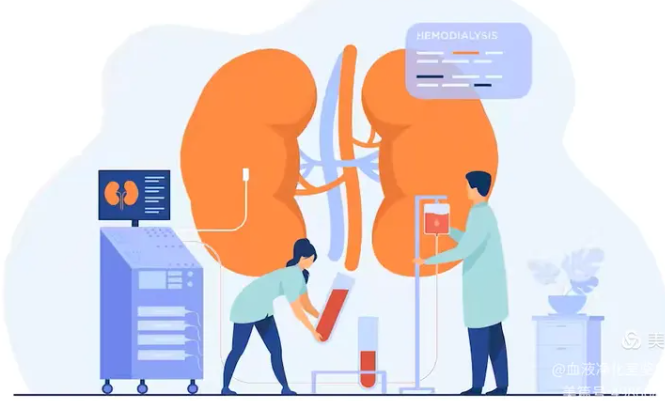
How to Arrange Dialysis in China: A Practical Guide for Travelers and Long-Stay Patients
How to treat Prostate Cancer in Shanghai?
Why Savvy Expats are Ditching Private Clinics for Shanghai’s "Top Tier" Public International Departments
Copyright © 2023 Yewen Renyi & ShanghaiDoctor.cn (This website is a non - profit medical humanities platform. The information contained herein is solely for biographical and historical purposes and does not constitute any medical advice.) 沪ICP备2023005392号-2 XML 沪公网安备31010902100835号
 中文
中文 English
 Español
 沪公网安备31010902100835号