ShanghaiDoctor - Where China's Healing Wisdom Shapes Modern Medicine

Update time:2026-10-15Visits:29
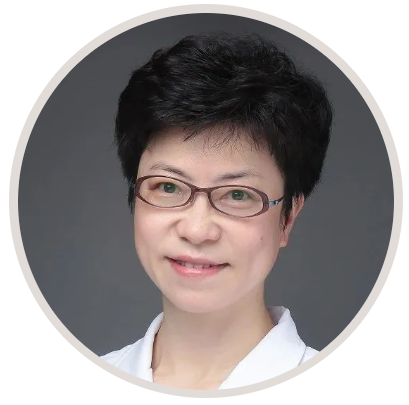
“Mountains and rivers stretch far, and ordinary life goes on by the hearth. When I see my patients happy, I am happier than anyone.”
— Zhang Jian
Zhang Jian is Chief Physician, Doctor of Medicine, and Doctoral Supervisor, and Executive Deputy Director of Gynecology at the International Peace Maternity and Child Health Hospital of the China Welfare Institute in Shanghai. Her work is laparoscopic and hysteroscopic surgery—keyhole operations through the abdomen and through the cervix—and each year she leads more than two hundred complex procedures in the highest of China’s four surgical-difficulty grades, with training in robotic laparoscopy that has included periods in Hong Kong and the United States.
Her clinical signature lies in three subspecialties: endometriosis, cesarean scar defect (a pouch-like “niche” left in the wall of the uterus after a cesarean section), and reconstructive surgery of the female reproductive tract. Over the past decade she has built the service out from clinic to laboratory into a complete discipline. She is deputy head of the reproductive surgery group of the China Maternal and Child Health Association, a standing council member of the science-and-innovation and organ-reconstruction branch of the Chinese Association of Plastics and Aesthetics, a member of the Shanghai obstetrics and gynecology society of the Chinese Medical Association, and deputy head of its gynecologic endoscopy group. She is also deputy director of the medical committee of the Jiusan Society in Shanghai, one of China’s small, officially recognized political parties whose membership has traditionally been drawn from scientists and physicians.
She is principal investigator on a topic within a National Key Research and Development Program project on reproductive health and major birth defects, assessing reproductive-health problems among people of childbearing age in the community. She has led more than ten further projects, including Shanghai key clinical specialty development and National Natural Science Foundation grants, and is first or corresponding author on more than sixty papers, thirty of them indexed in the Science Citation Index.
She is Shanghai-born, from Qibao, an old water town on the city’s western edge. As far back as she can remember she wanted to be a doctor, and specifically a gynecologist and obstetrician. She cannot say why. It felt, she says, like a natural kinship. The likely source was an aunt by marriage who was a village “barefoot doctor”—one of the briefly trained rural health workers of the commune era—who carried a medicine box into the fields and up the hillsides, gave injections and drips, delivered babies, and set bones. The aunt owned a copy of the Barefoot Doctor’s Manual, a thick book with a green cover. At eleven or twelve, Zhang carried it around and read it with pleasure. No one taught her. It was, she says, her first medical education.
After high school she entered the medical program of Shanghai Second Medical University, and on graduation she chose obstetrics and gynecology without hesitation. In 1990 she joined the Third Hospital of the Shanghai Textile Industry Bureau, a secondary-level hospital—in China’s three-tier system, a mid-sized district facility below the large tertiary teaching hospitals. The hospital was small, and its obstetrics and gynecology department smaller. She was satisfied. The year there, she says, was a sponge soaking up water.
In 1993 a chance opening took her to the International Peace Maternity and Child Health Hospital. She rotated through clinic, obstetrics, and gynecology, half a year at a time, round and round, until 2003, when she was promoted to Associate Chief Physician and settled in gynecology. Every day, she says, carried a full sense of achievement; the work was the best possible answer to what she had wished for. Seeing one patient after another pulled out of danger made her happy.
One night shift in obstetrics stays with her. A woman came in after midnight with abdominal pain and abnormal fetal movement. The fetal heart was beating fifty or sixty times a minute. By the time she reached the operating room the baby had died. The danger was only starting. The placenta had separated early, and because she had come late there was heavy bleeding inside the uterus. Zhang and her colleagues fought for eighteen hours. They saved the mother’s life, and her uterus, and only then did Zhang allow herself a smile of relief.
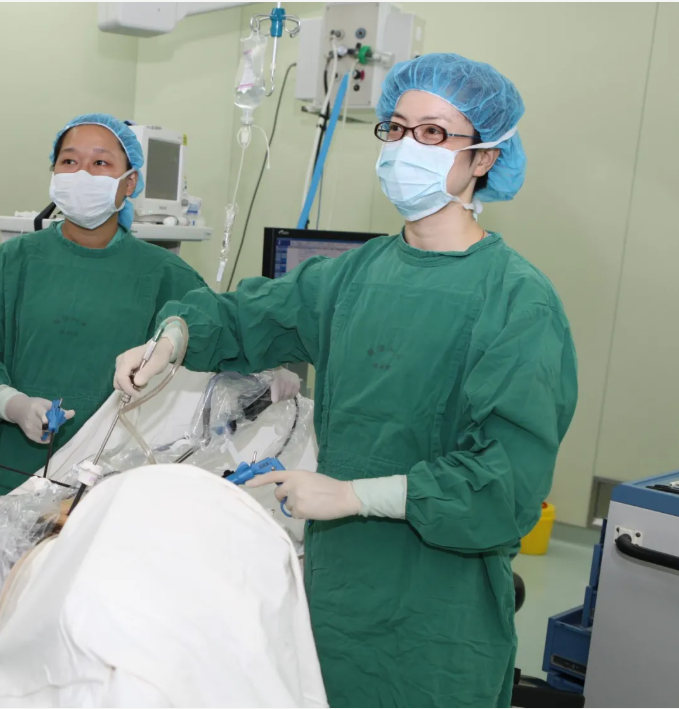
Endoscopy in gynecology was, at first, only for looking. At the hospital it had been used since the late 1970s for diagnosis under local anesthesia, which at the time seemed miraculous. Gynecologic laparoscopic surgery began to develop in the early 1990s, and in 1995 endoscopic treatment started in Shanghai. Zhang learned alongside the team from the start, through repeated endoscopy training courses. In the two decades since, her group has done a number of the field’s first operations.
Colleagues say that watching her operate is like looking at a finished piece of work, and credit talent. She credits repetition: talent still has to be hammered a thousand times before quantity turns into quality.
The disease that became her original contribution is the cesarean scar defect. It is most common after cesarean delivery but can follow other surgery on the uterus, such as fibroid removal or correction of a malformation. China’s cesarean rate has stayed high despite efforts to promote vaginal birth, and the defect—uncertain in timing, confusing in its symptoms, and demanding on imaging—has only recently been widely recognized. In simple terms, the layers of uterine muscle have not fully knitted at the incision, leaving a thin, weak spot. A woman whose periods drag on after a cesarean should be checked for it. A later pregnancy can rupture the uterus, and an embryo implanted in the defect can cause bleeding that is hard to control. The condition always existed, she says, but many doctors did not recognize it, and as cesarean rates in China rose over thirty years, the number of women affected rose too. The problem sharpened after 2016, when the country’s universal two-child policy took effect and many women with a prior cesarean sought a second birth.
The hospital surveyed first-time cesarean mothers by ultrasound forty-two days after delivery and found a defect in 42 percent. The rate is higher after a second cesarean, and after a third it is close to universal. Many gynecologists, she says, see the defect and do not recognize it as something to treat, and because the opening is so small it is often missed altogether.
At the end of 2016 she convened outpatient, imaging, obstetrics, and family-planning colleagues for a multidisciplinary meeting on the condition, and the hospital’s program began. Her team now offers a full plan of medication and surgery, has built a disease-prediction model, and uses three-dimensional MRI to reconstruct the defect. The difficulties, she says, are concealment—it takes extreme precision to find, and routine screening rarely does—and patients’ reluctance to face another operation after a cesarean. Minimally invasive repair can now go in through the vagina, a natural opening, with less trauma, faster recovery, and lower cost than other surgical repairs. Patients come from across the country. Last year, by her count, more than four hundred were admitted for surgery and about three thousand outpatient visits did not need it.
Her operating style, she says, is about heat control, the way a cook judges a flame: neither sweeping cuts everywhere nor timidity at every step. Over ten years the hard cases have multiplied—deep endometriosis, complex genital-tract malformations, and patients who have already had several operations elsewhere and arrive for her to finish the job.
One woman of forty-nine had deep endometriosis so severe that her pelvis had fused into what surgeons call a frozen pelvis, with bowel, uterus, and ovaries bound together and no clear borders between them. The operation lasted six hours, her longest. She did not eat, drink, or leave the table. In cases like this, she says, a sense of professional duty makes her bold and careful at once, advancing one secured step at a time. It was like walking a wire on which nothing could slip.
Reproductive-tract malformations are the conditions patients find hardest to speak about: an absent uterus, an absent vagina, developmental anomalies of many kinds. No two are alike. Each patient’s anatomy has to be analyzed on its own before an approach can be imagined. A woman of twenty-eight had a single kidney, no vagina and no uterus, two ureters on that one kidney with misplaced openings that had caused the kidney to swell, and an anorectal malformation repaired in childhood—a rare combination of anomalies in three systems. Her first words to Zhang were that she had a boyfriend she loved and wanted to marry. After careful assessment, Zhang operated together with urologists from Huashan Hospital. The kidney was preserved, the ureters corrected, and the vagina reconstructed. A year later the couple married and sent her wedding sweets.
These operations, she says, change their lives: they leave years of suffering behind and find happiness. Before surgery the patients live in shame and timidity, so surgery alone is not enough; they also need psychological support. She talks with them when she has time, and many call her “auntie.” Because a small problem at a dressing change can undo the whole repair, she changes the dressings herself, holidays included. Many hold her and cry when they leave, and she cries too. Good wishes still arrive from across the country.
Her defining trait, she says, is persistence. Of a class of nearly one hundred, about a tenth are still working as front-line doctors, and fewer still are women who have stayed at the operating table for thirty years. These days she is studying artificial intelligence with her students. Colleagues know that wherever there is a new operation or a new study, she will be there.

ShanghaiDoctor.cn: You supervise many students. Are you satisfied with them, and how do you teach?
Zhang Jian: As a doctoral supervisor I have dozens of students. My sense of achievement now comes from taking them farther. They have won many honors, run many projects, and published dozens of papers abroad. I am fairly satisfied with the team: high output, high efficiency. I ask of them what I ask of myself. Master’s or doctoral, I teach each one hands-on and keep control of every project. Two things above all. Rigor: when you publish in an international journal, one small oversight can ruin a paper. And standardized, correct technique. What I tell them most is to work hard; you reap what you sow.
ShanghaiDoctor.cn: What does medical humanities mean to you?
Zhang Jian: Considering everything from the patient’s side—her feelings, her pain—and how best to resolve what is wrong in her body. Real comfort does not need words. If you truly care, a look, a gesture, a sentence is felt. I have received a fair number of thank-you letters and banners, perhaps because patients feel I give them strength, courage, and confidence. Being a good doctor is not easy. Take the fullest responsibility for the patient, think of her interests, care for the whole person.
ShanghaiDoctor.cn: Have you ever regretted becoming a doctor?
Zhang Jian: Never. Not for myself, and not for my students. We have all made real progress.
ShanghaiDoctor.cn: What do you most want to do now?
Zhang Jian: Make my students better. I do ward rounds with them every day and explain things in detail, hands-on. Their future is the future of medicine, and it will do more for patients than my generation did. What I cannot tolerate in a student is fabrication, lying, and laziness—asking someone else to write a paper and adding your name to it for graduation or promotion, or using another person’s data as your own. None of my students is permitted to do that.
ShanghaiDoctor.cn: Do you have any time for yourself?
Zhang Jian: Very little. My family is my biggest support. After dinner I go straight to the computer: students’ papers, online meetings with students, meetings with collaborators abroad. I go to bed late, and before sleep I answer patients’ questions on medical websites. Day after day. Plain, and full.
ShanghaiDoctor.cn: If you taught medical students a class outside your specialty, what would it be?
Zhang Jian: How to be a good doctor. In lectures I tell students to love every patient with their whole heart. That is what gives you the drive to serve patients better, to do more clinical research, and to explore new techniques.
ShanghaiDoctor.cn: One piece of advice for medical students?
Zhang Jian: Once you have chosen your road, keep walking it.
ShanghaiDoctor.cn: Do you have a hero in medicine?
Zhang Jian: Many of the senior department heads at our hospital, who were my career mentors, and my doctoral supervisor, Huang Hefeng, a reproductive-medicine specialist and member of the Chinese Academy of Sciences. What she taught us most was how to be a person and a good doctor: be kind to one another, respect your teachers, do research alongside clinical work, and work hard. Under her guidance my generation held to why we started.
Zhang Jian’s career began with a green manual in a village and a heartbeat that was already too slow by the time it reached her. What she has built since is precise and specific: a pouch in a cesarean scar that most doctors do not see, a frozen pelvis taken apart over six hours, a reconstructed body that let a young woman marry. The phrase she uses for it is not about technique. Mountains and rivers far away; cooking smoke from ordinary homes. The work is measured in the second half of that line.
Editor: Chen Qing
If you need any help from Dr. Zhang, be free to let us know at Chenqing@ShanghaiDoctor.cn.
Adapted from the Yewen Renyi (晔问仁医) interview “张健 | 山河远阔,人间烟火,” published on WeChat on 29 September 2020. Facts and titles are as of that date.
Dr. Chen Sun | Newborn Heart Intervention, and Staying Young Enough to Be Moved
Dr. Wu Yurong | Fetal Echocardiography, and Kindness as Part of the Job
Dr. Li Dawei | Sphincter-Saving Surgery, and the Operation That Fits the Patient
Dr. Zhang Jian | Laparoscopy, and the Hearth Fires of Ordinary Life
Dr.Sun Jing | Fertility-Sparing Surgery, and a Future Already Here
Dr. Li Qingyun | Sleep Apnea, and Illness Removed Without a Sound
Dr. Zhu Zhiling | Gynecologic Surgery, and a Line She Would Not Cross
Dr. Yuan Gongjie | Children's Smiles, and the Orthodontist Who Still Tells Stories
Dr. Chen Sun | Newborn Heart Intervention, and Staying Young Enough to Be Moved
Dr. Wu Yurong | Fetal Echocardiography, and Kindness as Part of the Job
Jiang Liping | Speech Therapy, and the Lamp She Carries
Dr. Li Dawei | Sphincter-Saving Surgery, and the Operation That Fits the Patient
Dr. Zhang Jian | Laparoscopy, and the Hearth Fires of Ordinary Life
Dr.Sun Jing | Fertility-Sparing Surgery, and a Future Already Here
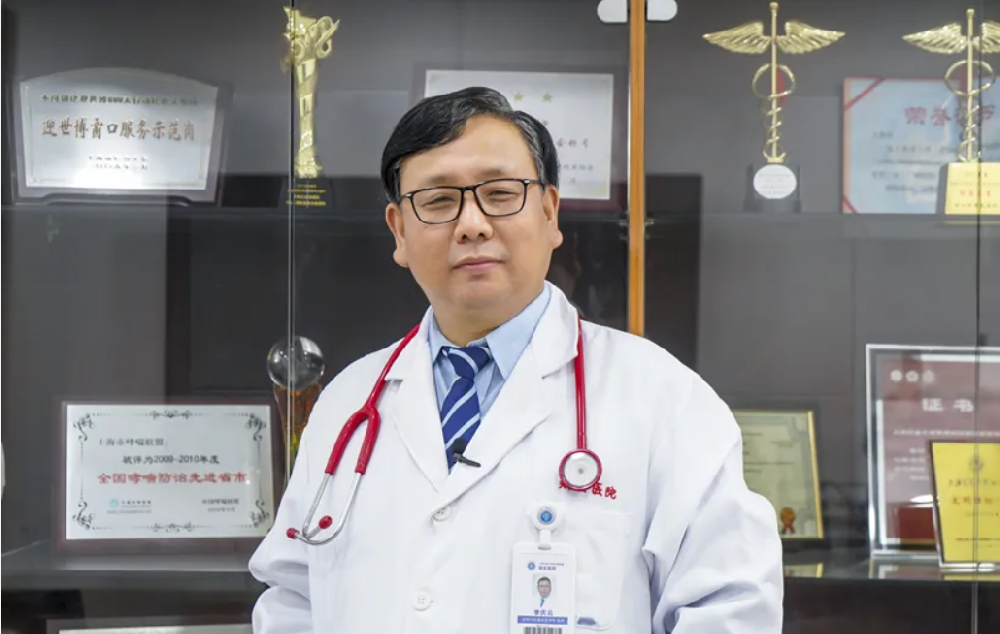
Dr. Li Qingyun | Sleep Apnea, and Illness Removed Without a Sound
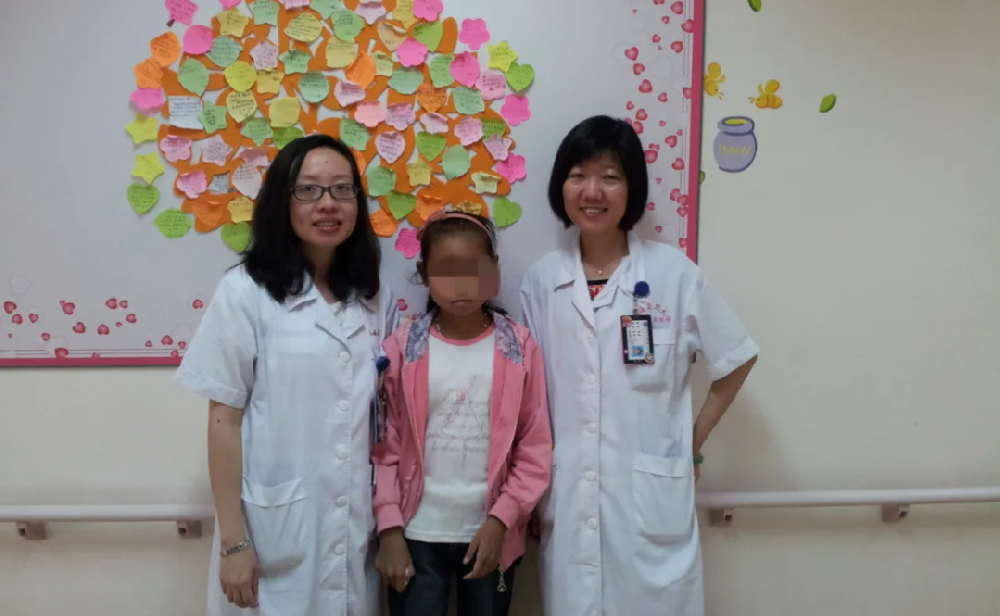
Dr. Shen Qian | Children’s Kidneys, Lucid and Gentle
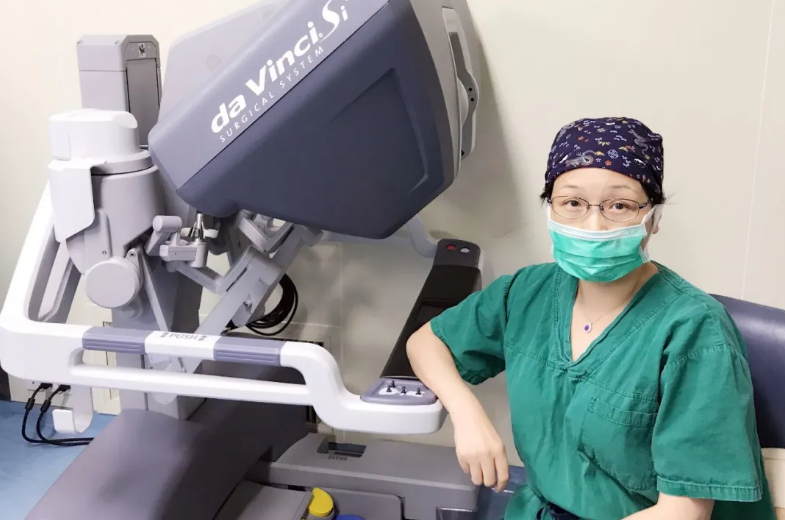
Dr. Zhu Zhiling | Gynecologic Surgery, and a Line She Would Not Cross
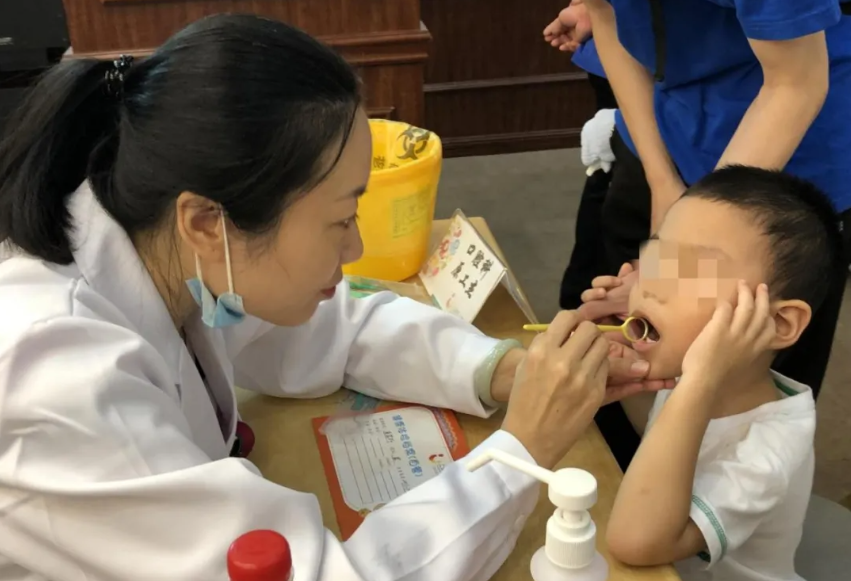
Dr. Yuan Gongjie | Children's Smiles, and the Orthodontist Who Still Tells Stories
Copyright © 2023 Yewen Renyi & ShanghaiDoctor.cn (This website is a non - profit medical humanities platform. The information contained herein is solely for biographical and historical purposes and does not constitute any medical advice.) 沪ICP备2023005392号-2 XML 沪公网安备31010902100835号
 中文
中文 English
 Español
 沪公网安备31010902100835号