ShanghaiDoctor - Where China's Healing Wisdom Shapes Modern Medicine

Update time:2026-03-17Visits:4767
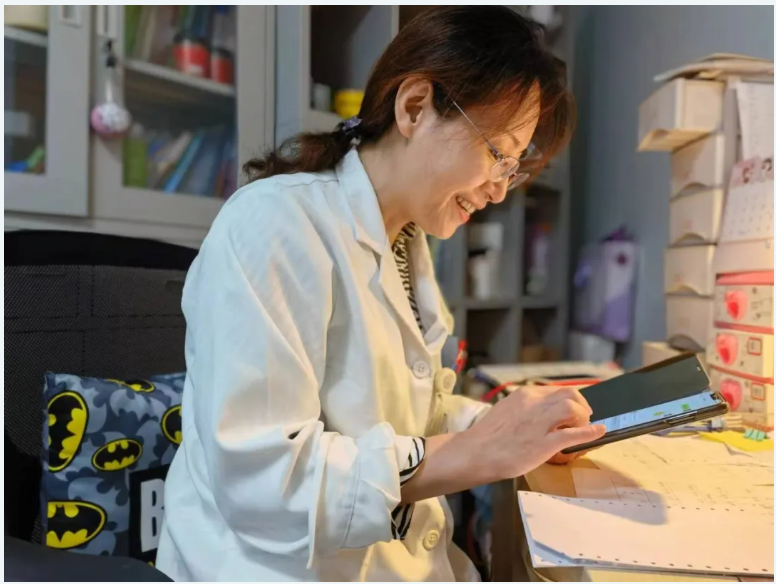
Dr. Xiao Caiwen, Master’s Supervisor. She graduated from Shanghai Jiao Tong University in 2009 with a Doctor of Medicine degree, studying under the renowned Professor Fan Xianqun. She currently serves as a Chief Physician in the Department of Ophthalmology at Shanghai Ninth People’s Hospital, Shanghai Jiao Tong University School of Medicine.
1.Revisiting Doctor Xiao
Meeting Dr. Xiao Caiwen again, she seems subtly changed from five years ago. While her voice and appearance are familiar, her words now carry a profound depth of confidence.
"When I first arrived at the Ninth Hospital, I would agonize over every single surgery beforehand, compulsively reviewing the literature, designing plans, and comparing options. In the operating theatre, I was tense, every nerve on edge. Only when the procedure ended would I realise my legs were stiff and my scrubs soaked with sweat. Back home, the anxiety lingered; I’d even dream of the surgery, fumbling clumsily in my sleep before jolting awake."
Today, Dr. Xiao remains a perfectionist, demanding nothing less than 100% from every operation. She will invest five or ten times the effort to achieve an impeccable result. Yet, she now approaches each surgery with remarkable composure and focus, often concluding with a quiet, knowing smile. This confidence has been forged through years of dedicated study and surgical practice.
Dr. Xiao Caiwen specialises in the minimally invasive surgical treatment of lacrimal duct disorders.
These conditions are among the most common in ophthalmology. A blocked tear duct causes constant, involuntary watering, bringing relentless discomfort and distress. Treatments have historically been unreliable, with high rates of recurrence. Consequently, few doctors choose to dedicate their careers to this niche field, often working in obscurity without widespread recognition.
Xiao Caiwen is not one to shy away from a challenge. Her focus remains fixed on the patient’s need: "Whatever problem they have, I must solve it." For over a decade, while others have only dabbled or changed direction, Dr. Xiao has delved deeply into lacrimal duct research since accepting the mission from her mentor, Professor Fan Xianqun. She listens intently to patients, tailoring her techniques to their individual anatomy. She does not rigidly follow old methods but innovates, transforming patient outcomes into the most powerful testimony, thereby offering more people a real choice.
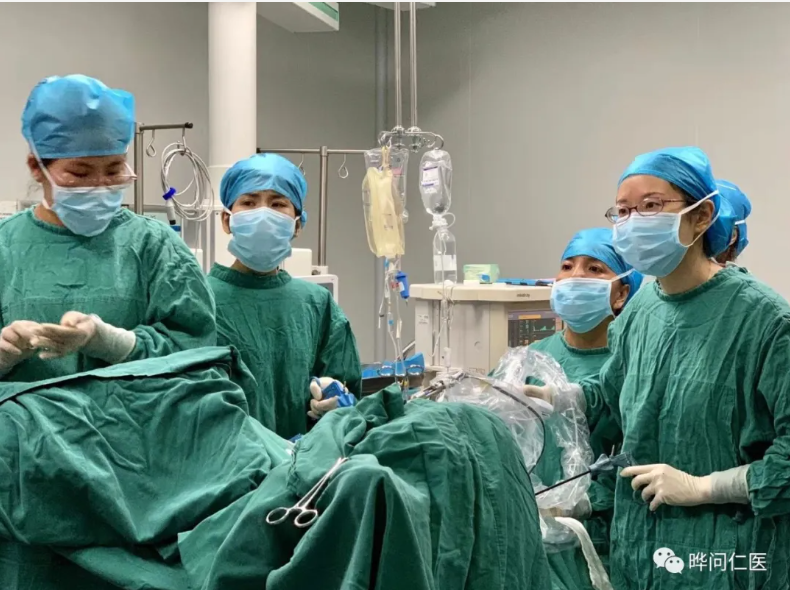
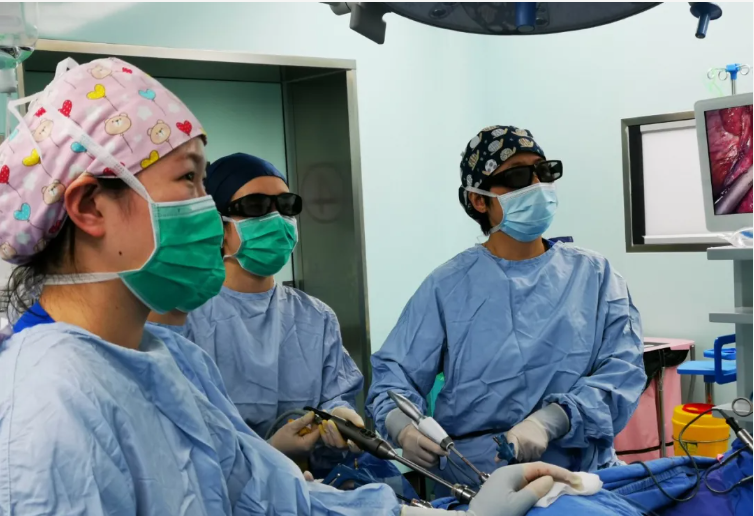
One of ophthalmology’s most daunting procedures is the repair of a chronic lacrimal canaliculus rupture, which deters many surgeons. This is precisely Dr. Xiao’s specialty. With masterful endoscopic skill, she gently wipes away her patients’ tears. From newborn infants to elderly gentlemen, they arrive with eyes brimming and depart with faces beaming.
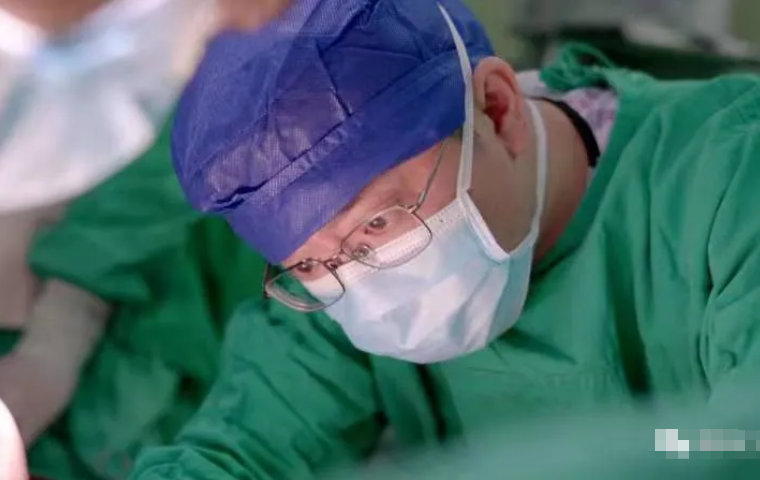
Four years ago, a 40-year-old male patient arrived at her clinic. Following severe facial trauma that required extensive suturing, he had developed both an eyelid deformity and a blocked tear duct after healing. By the time he was referred to Dr. Xiao, over two years had passed since the initial injury. She calmly assessed him, conducted a thorough examination, and proceeded to surgery. Under the microscope, with calm patience, she navigated the scar tissue. Using intuition and experience, she visualised the likely severed ends of the tear ducts hidden from view. Lower canaliculus, upper canaliculus… she made acute judgements, located the break points, and reconnected them with embroidery-like precision. Dr. Xiao possesses immense patience; complex anatomy unfolds in her mind like a detailed map. "Post-surgery, the tear duct function recovered completely, without a trace of scarring. The patient wept for joy, and I was so happy I almost cried, too."
Patients with complex lacrimal duct conditions, many of whom had seen little improvement after treatment at major hospitals in Qinghai, Tibet, Xinjiang, and even Beijing, gradually began to be referred to the Ophthalmology Department of the Ninth Hospital. They came seeking the care of Dr. Xiao Caiwen and her team. Whenever she saw a patient’s recovery exceed expectations, she felt an indescribable joy—a satisfaction deeper than any material reward or acclaim, a genuine happiness that arose from within.
2. Success Follows Determination
Most of Dr. Xiao Caiwen’s cases are referrals, often involving complex and challenging conditions. “I am grateful for my patients’ trust,” she says. “It has given me the confidence to undertake highly difficult surgeries. I also want to actively share these techniques so that more patients can benefit.”
Under the guidance of her mentor, Professor Fan Xianqun, Dr. Xiao has led her team in organising seven endoscopic technique training workshops. There, she unreservedly shared years of accumulated experience with practitioners from across the country, offering hands-on demonstrations in correct surgical procedure and true patient care. After returning home, these practitioners have successively introduced advanced endoscopic surgeries, applying the same techniques to treat patients from around the world.
While teaching others, Dr. Xiao has also reached a new peak in endoscopic technology: navigated endoscopic surgery.
Optic canal decompression has long been considered a high-risk procedure that few surgeons dare to attempt. After injury, the optic nerve swells inside the bony canal—like a finger trapped in a tight ring. Prolonged compression can lead to nerve necrosis, severe vision loss, or even blindness. For any individual or family, it is devastating when the eye fails to recover sight even after the injury itself has healed.
Since 2012, Dr. Xiao and her team have pioneered work in this area. They introduced the endoscopic navigation system developed by Academician Fan Xianqun into decompression surgery for traumatic optic neuropathy.
“This surgery has long been regarded as the most dangerous in ophthalmology,” Dr. Xiao explains. “The optic nerve lies close to the internal carotid artery; one accidental touch could cause death or paralysis. In the past, ophthalmologists often felt helpless with such cases, or referred them to neurosurgery. Over the past decade, we have dedicated ourselves to this procedure, performing over 200 operations. Most patients have regained significant vision—enough to be useful. How to achieve even better visual recovery for more people remains a clinical challenge we are committed to exploring.”
There is one case Dr. Xiao still remembers vividly.
The patient was a 12-year-old with a fractured and malformed lacrimal canaliculus, complicated by an accompanying bone fracture, making the surgery exceptionally difficult. Using the technology available at the time, she completed the procedure, but years later, the ligament repair had loosened. During a follow-up, the young patient shyly mentioned that “the corner of the eye didn’t look quite right.” Though a subtle concern, Dr. Xiao took it to heart.
When the patient turned 17, they returned to Dr. Xiao. She greeted them warmly: “Perfect timing! I was just thinking of you. Now we have a way to repair it even better.” This time, the result was flawless. The eye corner was smooth and natural, with no visible trace of surgery—as exquisite as a work of art.
"Thoughts must be translated into action to yield results. I believe that in the near future, many of the challenges we now face will find very satisfactory answers," she said with a smile.
Dr. Xiao still holds many dreams close to her heart.
"To keep improving myself and to heal more patients—that is my deepest wish, my greatest dream. To communicate seamlessly with ophthalmologists worldwide and to share Chinese techniques abroad—that is another, more personal dream of mine."
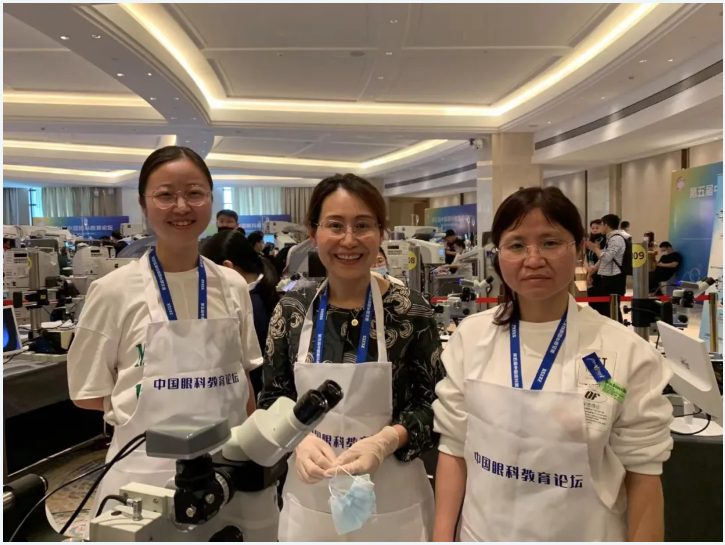
3. Giving Everyone Beautiful Eyes
Dr. Xiao Caiwen’s favourite specialty is actually oculoplastic surgery.
For rejuvenating the eyes of middle-aged and older patients, she possesses an innate, keen perception. With her unique aesthetic eye, she ensures postoperative results look entirely natural, setting a new standard for a youthful appearance. Many patients seek out Dr. Xiao specifically after seeing the "remarkable" results of friends or colleagues. Hearing their delighted feedback is her greatest joy.
Dr. Xiao designs eyelid procedures meticulously, tailoring them to each patient’s facial features and personal desires. In her consultation room, there is a cosmetic mirror, and one often witnesses this scene: doctor and patient smiling at their reflection together, discussing how to achieve a younger, more confident look. It resembles a joyful collaboration; Dr. Xiao describes and envisions beauty with a delicate, gentle touch. Beauty, she believes, is every woman’s "little indulgence."
She brings the same tenderness to all her patients, who often describe her as gentle, kind, and highly skilled.
When speaking with them, her tone is always soft and unhurried, making one feel completely at ease. "I believe being a doctor requires patiently listening. Some physicians master their craft but grow impatient during consultations; they have yet to fully embrace the heart of what it means to be a doctor."
Once, a child with ptosis achieved a perfect surgical outcome. During a follow-up, Dr. Xiao almost mistook him for a lacrimal duct patient and asked if his tearing had subsided.
"The result was truly too good; you couldn’t see any trace of surgery at all," she laughed, her heart swelling with happiness. The case had been particularly meaningful. Initially, the parents knew almost nothing about the condition or treatment. Before the operation, Dr. Xiao sat with them to discuss the surgical challenges, the plan, contingency measures, and the critical importance of early intervention. That conversation helped them understand. Afterwards, the result far exceeded expectations. Seeing the child thrive, both Dr. Xiao and the family were deeply moved.
"Perhaps a doctor’s fundamental duty is to heal and to save," she reflected.
4. A Doctor Has the Nature of Water
As the driving force of her department team, Dr. Xiao Caiwen’s days are a relentless cycle of surgeries and consultations from morning till night. When asked what has sustained her on this path, her answer was simple and pure: "It is merely a sense of beauty held within the heart."
She vividly recalls the moment her calling to medicine first took hold—as a child, watching the film *The Hippocratic Oath*. The words echoed within her: “I will first consider the health and happiness of my patients, and will do everything within my ability and judgment…” A silent, lifelong vow.
Xiao Caiwen’s elderly parents, who live with dementia, often no longer recognise their daughter. Yet whenever they hear she is going to see a patient, her mother still shuffles after her to whisper the same reminder: “Take good care of the patients.” In her mother’s words lies a simple, heartfelt version of the oath—a plainspoken “My sole purpose is the welfare of the sick.”
“With every patient I treat, I hope for their recovery. I strive to perform each surgery with precision, to make every operation the best it can be. I constantly reflect and explore, so that the vast majority of my patients achieve a good outcome.” One successful procedure after another, each patient’s improvement—whenever she sees them recover, Dr. Xiao Caiwen feels a deep sense of fulfilment.
This is a power born of purity, like the delicate scalpel in her hand: quiet, solitary, cool, yet always sharp and penetrating.
Of course, the path of treatment is not always smooth.
Progress in lacrimal duct surgery has faced countless difficulties. Persisting day after day, for decades, is harder than it sounds. Whether due to misunderstandings or disputes, over her long career Dr. Xiao has often faced moments of being misjudged. In the past, she might have felt wronged or angry. Now she consoles herself: “Let it be, as long as my conscience is clear.”
She often asks herself: “Between heaven and earth, what do I truly want? What am I pursuing?”
And then, from somewhere deep within, an answer surfaces—the mark of a great physician: the heart of a healer and the hands of a master.
No matter the hardship or grievance, the memory of her mother’s words—“take good care of the patients”—feels like an embrace, instantly soothing her spirit. Her heart grows clear and calm, ready to comfort patients and shoulder their anxiety and sorrow. She patiently explains in plain language that medicine has not yet reached its pinnacle; for many conditions, all one can offer is care and comfort. “Faced with a patient’s confusion, we must on one hand improve our skill, and on the other avoid confrontation—so that doctor and patient can face the illness together, and strive as one.”
Healing the body and tending the heart—this is the demeanour of a true physician.
“After all, people are different. Being a doctor isn’t about straightening patients out or making them think like you. We must find ways to reach our shared goal. When you meet turbulent water, you flow around the rocks, channelling all your energy into honing your craft. A doctor should be like water—winding and adaptable, but always flowing toward the sea.”
5. The Refinement of a Life’s Work
In truth, the year she first arrived in Shanghai, Dr. Xiao Caiwen faced immense pressure.
In an interview five years ago, she described how, after completing surgeries by day, research tasks awaited her at night, leaving little time to unwind. Her escape was to drive out of the city with her family. “Once we left Shanghai’s skyscrapers behind, the pressure would gradually fade with the receding skyline.”
Now, however, this city looks different in her eyes.
She no longer felt that crushing pressure, nor the urge to escape, nor any longing to return to the more relaxed rhythm of hospital life before her PhD. She had finally made peace with a simple truth: “Many people are more accomplished than I am, but I, too, am more accomplished than many.”
“A fast pace doesn’t mean cutting corners; I can take the time to delve deeply into my research. Even under great pressure, I must keep my own rhythm—you cannot run a marathon at a sprint. Pressure and burden are a form of self-cultivation. Every difficulty is a chance to transcend yourself, an unavoidable crossing point. The only way is to meet it actively and overcome it.”
Water, by nature, flows gently and steadily, yet it possesses a tenacity that cannot be cut by the sharpest blade.
In her professional and academic life, Dr. Xiao Caiwen moves with clear purpose. Each morning at 5:30, she spends an hour studying English literature—a discipline she has maintained for over a year. After performing the most complex and high-risk surgeries, she meticulously records not only the procedure, but also her own reflections, continually refining her practice. In routine operations, she pursues an almost artistic mastery, aiming to minimise patient suffering, find wonder in the ordinary, and accumulate valuable clinical insight. “I often feel I am tunnelling into the unknown, discerning patterns as I go, and then pushing myself to write them down—to voice the perspectives of us Chinese doctors. China has so many patients, and clinicians such rich experience. Why not document it, so others may learn and avoid unnecessary detours?”
Clinical work, research, teaching—Dr. Xiao Caiwen smiles as she says she still has a long road ahead. “Life itself is a process of exploration. How can there be a fixed path? Life is about experience, with one constant theme: the shaping and pursuit of the self. This pursuit isn’t primarily about material gain, but about tempering your character and comprehending the essence of being.”
At the close of our conversation, Dr. Xiao shared a phrase she holds dear:
“Though the body may be confined to a corner, the heart can yearn for the stars.”
Busy surgeries, anxious consultations, the pressures of life, the relentless rush from dawn till dusk—even separation, even death. So often, life seems to trap us helplessly in a narrow space. And yet, deep within, a faint glimmer can still hold galaxies and oceans.
To all dream-chasers who fear no hardship, who do not succumb to mere convention, and who remain steadfast and serene—we wish you good fortune.
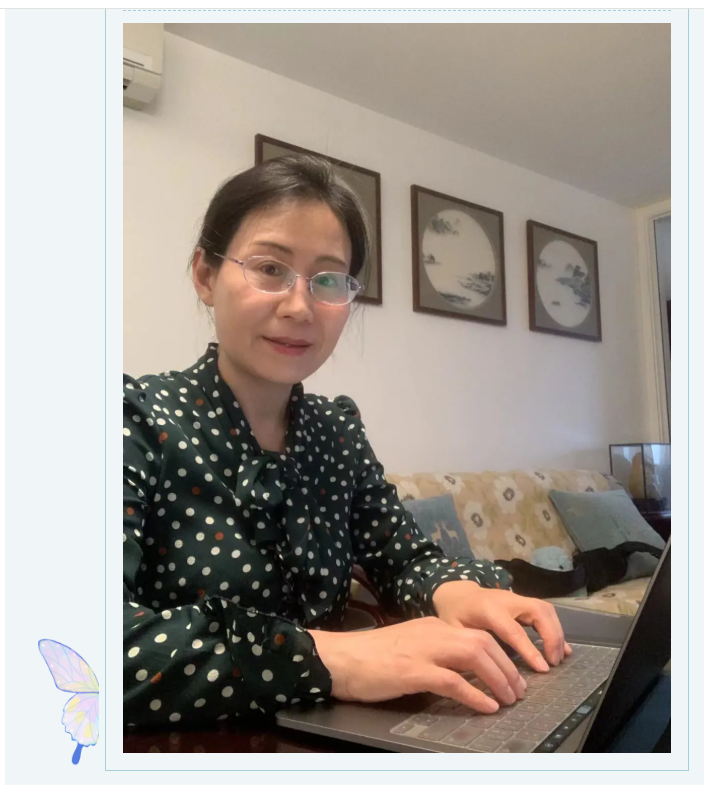
Editor: Chen Qing @ ShanghaiDoctor.cn
If you need any help from Dr. Xiao, please be free to contact us at Chenqing@ShanghaiDoctor.cn.
Dr. Chen Tongyu | Chest Surgery Without a Tube, and No Claim to Greatness
Dr. Yang Ji | A Dermatologist Who Measures the Years by Who Gets Better
Dr. Chen Gong | Children's Bile Ducts, and a Future He Chose Himself
Dr. Luo Zhiguo | An Oncologist Still Hoping for One More Reunion
Dr. Shi Hongcheng | Growing Nuclear Medicine from One Old Scanner
Dr. Huang Anhua | Still Glad to Stand Under the Gallbladder Lamp
Dr. Ding Ding | Kindness in the Room Where Endometriosis Is Cut Away
Dr. Wang Xuefei | Gastrointestinal Surgeon Advancing Care for Early-Onset Gastric Cancer
Dr. Chen Tongyu | Chest Surgery Without a Tube, and No Claim to Greatness
Dr. Yang Ji | A Dermatologist Who Measures the Years by Who Gets Better
Dr. Chen Gong | Children's Bile Ducts, and a Future He Chose Himself
Dr. Luo Zhiguo | An Oncologist Still Hoping for One More Reunion
Dr. Shi Hongcheng | Growing Nuclear Medicine from One Old Scanner
Dr. Li Wei | Loneliness in the Lab, Hope for Itchy Skin
Dr. Huang Anhua | Still Glad to Stand Under the Gallbladder Lamp
Dr. Ding Ding | Kindness in the Room Where Endometriosis Is Cut Away
Dr. Wang Xuefei | Gastrointestinal Surgeon Advancing Care for Early-Onset Gastric Cancer
Dr. Yi Xiaofang | Director of General Gynecology — Expertise in Endometriosis and Minimally Invasive Surgery
Copyright © 2023 Yewen Renyi & ShanghaiDoctor.cn (This website is a non - profit medical humanities platform. The information contained herein is solely for biographical and historical purposes and does not constitute any medical advice.) 沪ICP备2023005392号-2 XML 沪公网安备31010902100835号
 中文
中文 English
 Español
 沪公网安备31010902100835号