ShanghaiDoctor - Where China's Healing Wisdom Shapes Modern Medicine

Update time:2026-07-11Visits:3960
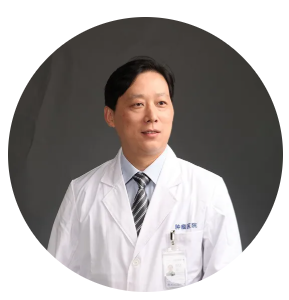
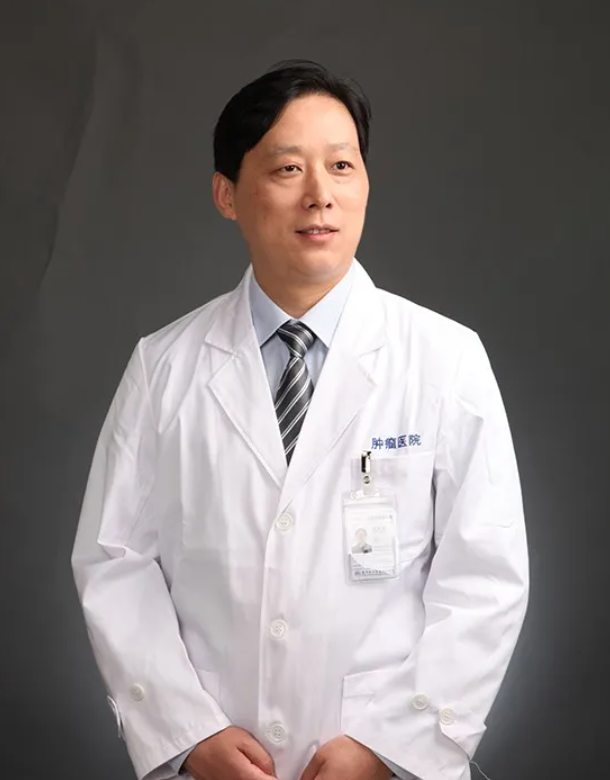
Lai Songtao holds a Doctor of Medicine degree and serves as Associate Chief Physician and Associate Professor at Fudan University Shanghai Cancer Center.
He earned his M.D. in Oncology from Fudan University Shanghai Cancer Center in 2012. Between 2009 and 2011, he trained at the GSI Helmholtz Centre for Heavy Ion Research in Germany and the Heidelberg Ion-Beam Therapy Center (HIT) at Heidelberg University Hospital. In October 2013, he completed a short-term academic exchange at the National Institute of Radiological Sciences (NIRS) in Japan. Since 2012, he has been practicing at the Radiation Therapy Center of Fudan University Shanghai Cancer Center.
Professional Expertise: Radiotherapy and chemotherapy for thoracic tumors—particularly lung cancer and esophageal cancer—along with integrated strategies that combine targeted therapy and immunotherapy.
He has published more than 20 papers on thoracic oncology, over 18 of which are indexed in SCI journals.
He is a member of the Shanghai Medical Association, the Molecular Targeted Therapy and Immunotherapy Committee of the Shanghai Anti-Cancer Association, the Chinese Society of Clinical Oncology (CSCO), the Cancer Nutrition and Supportive Therapy Committee of the Chinese Anti-Cancer Association, and the Molecular Oncology and Immunotherapy Committee of the Chinese Research Hospital Association.
A person is like an army—mustering strength of mind and spirit, confronting life’s ups and downs, the body’s pain, and the passage of time—undiscouraged, guided by a sense of calling, and free in spirit. Life has always been about accepting what comes without yielding.
“In a profession where success is expected and failure can mean a life lost, every case—whether heartwarming or perilous—is a life-and-death struggle. Beyond life and death, little else truly matters.”
Dr. Lai Songtao took a sip of coffee and spoke softly, a quiet serenity in his eyes.
Medicine and philosophy share the same roots. The principles of natural philosophy are woven into the fabric of clinical practice. Modern medicine cannot escape its inherent uncertainty; our task is to understand, as fully as possible, the boundaries between what is certain and what is not.
Clinical decision-making is a complex process shared by doctor and patient. Dr. Lai put it plainly: “Whether doctor or patient, we must accept the complexity of clinical reality. Decision-making is both a science and, at times, an art—both flowing from the physician’s personal competence. When we face a patient, we draw on professional knowledge and experience, clinical standards, and the best available evidence to craft a safe, rational, effective, and appropriate plan. We do so within the bounds of law, regulation, and medical ethics, while respecting the patient’s rights and wishes, and helping them make informed choices. The wonder of clinical medicine lies in the pursuit of perfection amid uncertainty.”
The physician’s heart dwells beyond the material world, while the warmth and chill of human life continue their endless cycle.
“Being a doctor means engaging with people of every background, each with their own views and positions. That pressure and responsibility—I find it deeply challenging!” Family members advised him against studying medicine.
After the college entrance examination, at his father’s suggestion, Dr. Lai filled every application choice with medical schools. After several turns of fortune, he was admitted to West China University of Medical Sciences, as he had hoped.
West China University of Medical Sciences is home to many stately, elegant buildings with a timeless grace. Every autumn, the golden, fan-shaped ginkgo leaves lining the roads flutter down, carpeting the ground like brocade. Walking across campus, a student might stop a professor—or even a dean or academician—to ask a question. No matter the time or place, the teacher would pause and engage in a warm, equal conversation, as if speaking with a friend. “This gentle and inclusive campus culture nurtures the earnest, eager hearts of students seeking knowledge.”
During the clinical years, what left the deepest impression on Dr. Lai was the hospital itself. In corridors, wards, and offices, one would occasionally meet the chief editors or contributors of the medical textbooks that students revere as classics—the People’s Medical Publishing House editions. Medical students and young doctors thus had the privilege of daily guidance from these senior physicians, striving to follow in their footsteps as one might revere heroes.
“First comes rigor, then balance. We all aspire to be healers who save lives and ease suffering—like the swordsmen of old, wielding a peerless blade to cure and rescue.”
At that time, oncology was brimming with discoveries waiting to be made. “Among the many approaches to cancer treatment, radiotherapy is one of the most important. It demands a rigorous and meticulous work ethic. In the end, I decided to become a radiation oncologist.”
The course was set, yet vast horizons still lay ahead.
Radiation therapy for tumors—commonly called radiotherapy—uses ionizing radiation to combat cancer.
Roughly 70% of cancer patients will need radiotherapy at some point in their treatment. Today, its role continues to grow; it is now one of the principal methods for treating malignant tumors.
After several years of practice, Dr. Lai still sought further refinement and prepared to resign in order to pursue a doctoral degree. The decision did not receive support from most of his family.
“Only my father stood by me, silently. I believe the old man had been forced to halt his own studies by the circumstances of his era—a lasting regret. He had a vision of distant horizons; the dreams he could not fulfill, he hoped I would achieve for him.”
Through determined effort, Dr. Lai was admitted to Fudan University Shanghai Cancer Center for doctoral studies, beginning a new chapter. The radiotherapy program there is exceptionally strong, enjoying a high reputation both in China and abroad, with robust technical resources—one of the country’s leading centers for radiation oncology.
During his doctoral training, Dr. Lai studied at the GSI Helmholtz Centre for Heavy Ion Research in Germany and the Heidelberg Ion-Beam Therapy Center (HIT) at Heidelberg University Hospital. In October 2013, he also completed a short-term academic exchange at the National Institute of Radiological Sciences (NIRS) in Japan.
“Radiation oncology draws on multiple disciplines—clinical medicine, medical imaging, high-energy physics, computer science, and nuclear medicine. The breadth of knowledge required is considerable, posing a real challenge for any radiation oncologist. Beyond technical mastery, becoming a good doctor also demands deep reflection on social and humanistic questions.”
Some patients who had traveled long distances left a lasting mark on Dr. Lai.
Around 2016, a patient with a highly complex condition was referred from another hospital. “The clinical presentation was extremely rare. Dozens of nodules of varying sizes were scattered across the pleura, and a large volume of gelatinous material filled the abdominal cavity. Laparoscopic exploration later revealed more than 60 nodules, pointing to extensive abdominal metastasis of a malignant pleural disease.” The gastrointestinal tract’s motility was severely restricted by the massive gelatinous tumors, leaving the patient frustrated and in pain.
Several family members were medical professionals themselves, and the family was highly cooperative and trusting: “We are all doctors, so no need for lengthy explanations. We trust you. Just do your best. Fudan University Shanghai Cancer Center is the best cancer treatment center in our eyes. If the outcome here is not good, we will accept our fate.”
Carrying that trust, a multidisciplinary consultation was convened. A chemotherapy specialist quickly designed a targeted, relatively intensive regimen. The ensuing treatment was long and grueling. The patient endured it step by step while the medical team provided frequent care, comfort, and encouragement. After standard chemotherapy and targeted therapy, most of the tumors miraculously disappeared.
“The power of modern medical technology is astonishing and formidable. I felt deeply moved and grateful,” Dr. Lai recalled.
After the patient entered recovery, doctors from the relevant departments continued supportive care. To this day, there has been no sign of recurrence.
Of course, this is only one case.
From it we see that the treatment of malignant tumors depends not only on the power of medical science but equally on the patient’s trust and cooperation. Dr. Lai also remembered a young patient from northern China who, after several transfers, arrived at the Cancer Center. “Biopsy of the enlarged lymph nodes around the lower esophagus showed squamous cell carcinoma, yet gastroscopy and PET/CT could not locate the primary tumor. Although I suspected the esophagus, there was no definitive evidence at the time.” Later the patient sought care in Japan. A gastroscopy there identified a hidden primary lesion in the lower esophagus—exactly as Dr. Lai had initially suspected.
After communicating with the Japanese team, the patient returned promptly to China and received comprehensive treatment at Fudan University Shanghai Cancer Center: intensity-modulated radiotherapy, chemotherapy, and immunotherapy. Over time the lesion shrank and eventually disappeared.
A good treatment outcome, however, is not the same as a complete cure.
In the early years after the disease stabilized, the patient strictly followed medical advice, maintained a regular routine, and attended regular check-ups, with no major signs of recurrence. But after several years of stability, vigilance lapsed. Returning to a demanding career, the patient felt unwell shortly after the Spring Festival. A local examination revealed tumor recurrence with compression and adhesion to the stomach wall, severely impairing eating and quality of life. “When the patient came back to Shanghai, he quietly told me during consultation that over the Spring Festival, for the sake of career advancement, he had drunk heavily several times and felt unwell even then. Thinking the company was too busy and being careless, he had stopped regular check-ups, believing he was fine. By the time he had arranged his company affairs and sought care, the recurrence was clear, and he was full of regret. We promptly convened a multidisciplinary consultation and decided on thoracic surgery to remove the tumor, followed by adjuvant radiotherapy, chemotherapy, and immunotherapy. The entire course lasted about four months. The patient suffered greatly, and we doctors felt the weight as well,” Dr. Lai sighed.
Fortunately, the patient learned from the experience and now follows medical advice for regular check-ups and treatment, remaining in good health.
Countless such cases carry the quiet labor of physicians.
“Being a doctor is like a sculptor meticulously shaping a work of art. When the treatment effect is good, it feels perfect, and the mood soars.”
On the often-mentioned idea of “precision treatment,” Dr. Lai offers a distinctive view: “True precision begins with diagnostic precision—establishing an accurate treatment plan. The human body is a precise system in which all organs form an interconnected whole. Visual precision alone is a narrow definition. Our plans focus on the tumor itself while striving to protect the function of normal tissues and organs—that is the essence of precision treatment.”
In daily practice, multiple clinical guidelines are consulted, necessary examinations are listed systematically, tumor stage is determined, a clear diagnosis is reached, and then an individualized plan is formulated.
When radiotherapy begins, rigorous quality control is essential, along with high-level technical skill, great care, and immense patience.
From his mentor, Dr. Lai learned an enduring truth: when trapped in a predicament that cannot yet be escaped, the only thing to do is persevere. As for the rest, fate will take its course.
The battle against tumors is the same. Persevere, endure, and hope lies ahead.

From West China to Fudan, the journey has been arduous but fruitful. You must have met good teachers and helpful friends. Could you share your thoughts and experiences? We have interviewed some oncologists before, but they were mostly skilled in surgical treatment—the path most people choose. What prompted you to choose this direction?
Lai Songtao
Radiotherapy draws on knowledge from multiple disciplines—imaging, computer science, engineering, physics, and nuclear medicine. At the time, the Cancer Center of West China Hospital was organized into three main sections: thoracic, head and neck, and abdominal tumors. As a general hospital, however, its emphasis on oncology was not as concentrated. In contrast, the radiotherapy department at Fudan University Shanghai Cancer Center was highly advanced, with a deep reserve of technical expertise. That is why I chose to pursue my doctoral studies there. During those years I came to realize that when faced with seemingly insurmountable difficulties, the only thing to do is persevere. The rest will be arranged by fate. We often encounter dilemmas in which every approach seems wrong. That anxious state frequently heralds the dawn after darkness—endure it, and light lies ahead.
ShanghaiDoctor.cn:
Precision treatment is currently a hot topic. What are your thoughts on this?
Lai Songtao
Whether we call it individualized treatment or precision treatment, the concept has been developed in the West for many years. Yet because of limited physician numbers and incomplete conceptual continuity, precision treatment in the West is still far from perfect. If a patient’s tumor site differs from that of all other patients, then surgery and radiotherapy must also deviate from the standard. This first requires the doctor to have a clear grasp of the patient’s imaging and laboratory results, and then to tailor a plan accordingly. We must also ask whether the plan is truly the best available under current standards, and continuously refine it as new therapies emerge. That is individualized precision treatment. True precision lies in the accuracy of diagnosis and the establishment of the correct plan; prospective or retrospective clinical studies will ultimately confirm its value. The human body is a precise system, organs intricately connected and inseparable. Our treatment plans mostly focus on the tumor itself while striving to preserve or promptly restore the function of surrounding normal tissues. Precision at the visual level is a narrower definition. Our enemy is the tumor; bombing the enemy zone without destroying the surrounding trees—that is precision treatment.
Following these principles, we list the necessary examinations one by one to determine the tumor’s stage and its relationship to the body. Once treatment begins, it cannot be casually stopped. Choosing the wrong path can be counterproductive. Therefore several weeks of thorough examination are indispensable.
ShanghaiDoctor.cn:
You have studied at research centers in Germany and Japan. How would you compare the development of related particle technology at home and abroad, and what is the current status of its clinical application?
Lai Songtao
There are differences in national character: Germans are rigorous, the Japanese meticulous. But medicine knows no borders. When I was in Germany, I often felt that China’s medical level was on the verge of catching up with that of foreign countries, and that with economic prosperity a golden age of medicine was approaching. Today our medical level is on a par with that of leading foreign centers.
Simply put, if a problem can be resolved with conventional radiotherapy, proton and heavy-ion therapy is not necessary. For sarcomas, certain brain tumors, and other conditions resistant to conventional radiotherapy, proton and heavy-ion therapy becomes valuable. The current challenge is that the physical characteristics of proton and heavy-ion beams are not yet fully understood. This approach originated from research on cosmic proton radiation, from which anticancer applications were derived. Many aspects remain unknown. In general, standard conventional treatment is often sufficient; there is no need to fixate on particle therapy. Treatment must first be scientific, and only secondarily humanistic and social.
ShanghaiDoctor.cn:
Given your area of expertise, could you explain the symptoms and prevention of lung cancer, esophageal cancer, and similar conditions? Under what circumstances is radiotherapy or chemotherapy typically chosen? What are the treatment outcomes and prognoses?
Lai Songtao
What is a tumor? It is a group of malignant cells that grow autonomously. The occurrence, pathogenesis, and mechanisms of tumors still hold countless mysteries. What we can do is maintain a regular lifestyle, delay the onset of tumors as much as possible, and avoid additional risk factors. For lung cancer and esophageal cancer, quitting smoking is crucial. Improving kitchen range-hood quality is also important—research has shown that cooking fumes are a significant cause of lung cancer among Chinese women. Eating fresh vegetables and fruits is key; overnight leftovers contain many tumor-promoting factors. Maintaining a healthy work-life balance, going to bed early, waking at a reasonable hour, and having timely medical check-ups are essential. Keeping a cheerful mood matters too. There is a Chinese saying, “to die of melancholy,” and a low psychological state is detrimental to both mental and physical health.
ShanghaiDoctor.cn:
Your research focuses on the basic and clinical study of lung cancer and esophageal cancer. What is the current level of this field domestically and internationally? What are your prospects? In what ways will you promote development?
Lai Songtao
Scientific research is the driving force behind medical progress. How do we balance the two? There is basic research, clinical research, and translational research that sits between them. If one has ideals and aspirations, it is worthwhile to engage more deeply in medical research—it will provide clues. Among the subtle traces, medicine may take a step forward. Without accumulating small steps, one cannot reach a thousand miles; data is the most fundamental clue.
ShanghaiDoctor.cn:
What are your hopes for the future?
Lai Songtao
I hope that doctors and nursing teams can focus wholeheartedly on medicine, free from the pressures of survival, money, work, society, and even the weight of humanistic care expectations, and become purer medical professionals.
ShanghaiDoctor.cn:
What insights do you have in teaching students?
Lai Songtao
There are three points in teaching students. First, students must learn on their own; second, they must learn to communicate; third, they should promptly write down questions they do not understand, discuss them together, and always maintain curiosity about the medical profession. When being a doctor, do not always talk about dedication—in fact, all doctors are already dedicating themselves.
ShanghaiDoctor.cn:
How do you define a good doctor?
Lai Songtao
A good doctor first has excellent medical skills; if they can also bring humanistic care, then they are a very good doctor.
ShanghaiDoctor.cn:
What kind of person are you in daily life? What methods do you use to relieve stress?
Lai Songtao
As an oncologist, I often feel that nothing else truly matters beyond life and death. I used to love listening to music more than anything, but now I rarely have the time. When traveling for work, I sometimes read—essays are my favorite. Once in a while I go for a run or take a leisurely, aimless walk along the roadside.
Editor:Chen Qing
If you need any help from Dr. Lai, please be free to contact us at Chenqing@ShanghaiDoctor.cn.
Dr.Sun Jing | Fertility-Sparing Surgery, and a Future Already Here
Dr. Li Qingyun | Sleep Apnea, and Illness Removed Without a Sound
Dr. Zhu Zhiling | Gynecologic Surgery, and a Line She Would Not Cross
Dr. Yuan Gongjie | Children's Smiles, and the Orthodontist Who Still Tells Stories
Dr. Wang Chaoyang | Vitrectomy, and Flowers Once Hidden in the Eye
Dr. Zhao Jinhua | Nuclear Medicine, and the Flowers Along the Road
Dr. Shi Yuling | Psoriasis, and Spring Mountains Beyond the Plain
Dr.Ying Chunmei | Laboratory Medicine, Renewed a Little Every Day
Dr.Sun Jing | Fertility-Sparing Surgery, and a Future Already Here
Dr. Li Qingyun | Sleep Apnea, and Illness Removed Without a Sound
Dr. Shen Qian | Children’s Kidneys, Lucid and Gentle
Dr. Zhu Zhiling | Gynecologic Surgery, and a Line She Would Not Cross
Dr. Yuan Gongjie | Children's Smiles, and the Orthodontist Who Still Tells Stories
Dr. Wang Chaoyang | Vitrectomy, and Flowers Once Hidden in the Eye
Dr. Fei Aihua | Emergency Medicine, and Striving to Win
Dr. Zhao Jinhua | Nuclear Medicine, and the Flowers Along the Road
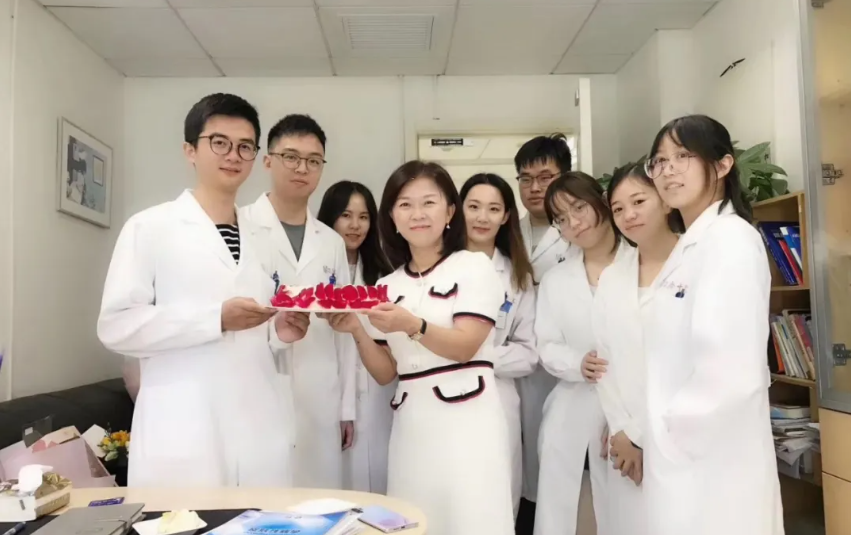
Dr. Shi Yuling | Psoriasis, and Spring Mountains Beyond the Plain
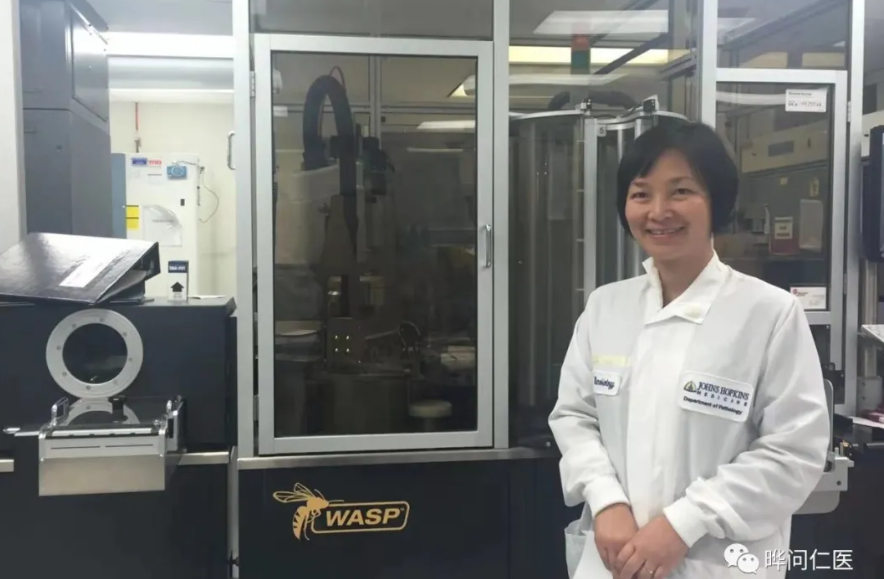
Dr.Ying Chunmei | Laboratory Medicine, Renewed a Little Every Day
Copyright © 2023 Yewen Renyi & ShanghaiDoctor.cn (This website is a non - profit medical humanities platform. The information contained herein is solely for biographical and historical purposes and does not constitute any medical advice.) 沪ICP备2023005392号-2 XML 沪公网安备31010902100835号
 中文
中文 English
 Español
 沪公网安备31010902100835号