ShanghaiDoctor - Where China's Healing Wisdom Shapes Modern Medicine

Update time:2026-10-31Visits:4
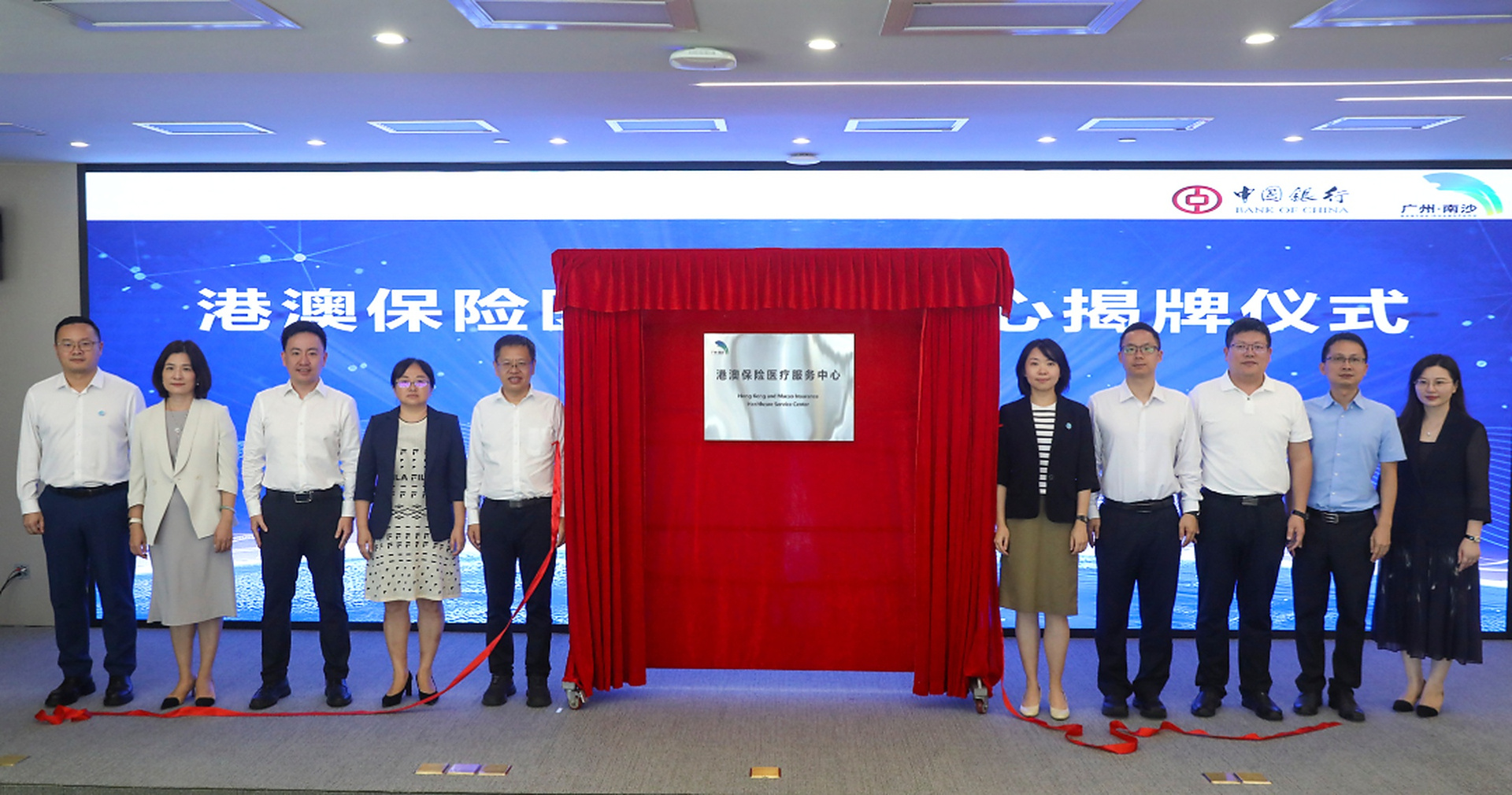
Guangzhou, October 2026 — A Hong Kong and Macao Insurance Medical Service Center has opened at the Nansha International Talent Hub in Guangzhou. The unveiling was hosted by the Nansha Development Zone State-owned Assets Supervision Bureau and jointly organized by Nansha Public Control Group and the Bank of China Nansha Branch, with city and district departments, Bank of China Guangzhou Branch, hospitals and elderly-care institutions taking part.
The center is a concrete step under the Nansha Plan and the “30 Financial Measures for Nansha.” On October 15, Bank of China’s “BOC Med-e-Pass — International Medical Financial Service Platform” went live for the first time in the Guangdong-Hong Kong-Macao Greater Bay Area. The new center is the offline door through which that platform’s extended services land in Nansha, with the aim of lining up cross-border insurance rules and mechanisms and making medical and elderly care easier for people from the three places.
Why a new center was needed
Nansha has already tried several cross-border medical projects, including the Greater Bay Area policy that allows Hong Kong and Macao drugs and devices, elderly medical vouchers, and international commercial insurance direct payment. Officials still point to familiar frictions: patients often pay first and claim later over a long cycle, and each hospital and insurer must connect one by one. The root problem, they say, is that information flows, fund flows and credit guarantees have not yet been joined up.
A Nansha Development Zone official asked partners to keep three goals in view: warm service, with medical transfers, escorting and recovery carefully arranged; solid mechanisms, with shared standards and data links; and a bright window of practice that other places can copy.
Xiao Liwei, Deputy President of Bank of China Guangzhou Branch, noted that a State Council opinion issued in April this year on expanding and upgrading the service sector called for “steadily advancing pilots in international medical services.” Bank of China, he said, used its cross-border financial strengths to build BOC Med-e-Pass and to tackle high hospital–insurer connection costs and weak compliant channels for cross-border care.
As early as 2025, with support from the Nansha SASAC, the bank helped Guangzhou First People’s Hospital Nansha Hospital and BOC Group Insurance launch an offline “no advance payment, zero cash” direct-pay service. After BOC Med-e-Pass went live this month, that model was upgraded into a platform, with plans to widen the hospital network, add insurance products and embed more deeply into Nansha’s medical and elderly-care settings.
Three “nos” for patients from Hong Kong and Macao
For commercially insured patients from Hong Kong and Macao, the center’s promise is summed up as three “nos”: no advance payment, no running around, and no self-service claims paperwork.
The platform’s cross-border insurance settlement channel is already running. When patients with commercial medical insurance seek care at hospitals on the direct-pay list, and when the visit falls within the insurer’s pre-approved range, they can receive treatment without paying first, without traveling back and forth for claims, and without operating the claim themselves. Escort services at the center have started at the same time.
Bank of China Guangdong Branch described the platform’s positioning as “one connection, full reach; global linkage, credit guarantee.” It brings bank credit into commercial insurance direct payment for the first time, using a global credit mechanism instead of requiring each insurer to place a deposit with every hospital. It also builds a cross-border renminbi settlement channel through the bank’s global clearing network and a trusted data space, using big data and blockchain, so that insurers and hospitals can exchange claim materials point to point in encrypted form.
Fifteen of Guangdong’s first batch of international medical service pilot hospitals have already joined the platform, including Zhongshan Ophthalmic Center of Sun Yat-sen University, Guangdong Provincial Hospital of Chinese Medicine and Guangzhou First People’s Hospital. Ping An Health, Taikang Life and CITIC Prudential were among the first insurers to sign, and several Hong Kong and Macao insurers have reached cooperation intent.
Before, during and after treatment
Beyond settlement, the center is built to manage the whole medical journey. It organizes services in three stages — before treatment, during treatment, and recovery and elderly care — so that from the moment a patient in Hong Kong or Macao decides to come to Nansha until a safe return home, each step has someone in charge.
“A course of medical care is not finished in a day,” said Du Zhuoming, project head of Yiheli Wellness Center under Nansha Public Control Group. Before treatment, the center offers process advice, itinerary planning and transfers; at the hospital, teams provide in-hospital escorting and inpatient companionship. After treatment, the wellness project is meant to take over post-operative or post-illness support, so that patients can stay longer in Nansha to walk, eat and visit. “One center in, full-path support,” he said, “so that overseas patients coming to Nansha feel the convenience of both settlement and medical care.”
Yiheli Wellness Center, in Nansha Subdistrict, has about 10,000 square meters of floor space across 17 floors and is planned for 205 elderly-care beds, with opening expected in spring 2027. It will include a Hong Kong and Macao seniors’ zone aligned with Hong Kong Social Welfare Department elderly-service standards, and will link with Guangzhou First People’s Hospital Nansha Hospital and the Nansha campus of the First Affiliated Hospital of Sun Yat-sen University for green medical channels.
The channel is meant to run both ways. Du said more overseas insurers are joining the bank platform, and that in time mainland residents may also use those insurers to receive care in Hong Kong.
Nansha SASAC said it will keep expanding the network of hospitals and insurers, and that by the end of this year transfers, short stays, wellness sojourns, nursing and health management, together with Yiheli’s 205 beds, will come into use step by step. Once the Nansha stretch runs smoothly, the model may be studied for wider use across the Greater Bay Area and beyond.
Editor: Chen Qing
If you need any help with medical care in Shanghai/China, be free to let us know at Chenqing@ShanghaiDoctor.cn.
Translated and adapted from a report on the Guangzhou Municipal Government portal, Guangzhou.gov.cn (广州市人民政府), “港澳保险医疗服务中心揭牌仪式在广州南沙举行”; with additional details from Guangzhou Nansha District Government, “港澳保险医疗服务中心在南沙揭牌启用 大湾区跨境医疗保险服务合作迈出新步伐”.
Nansha Opens Hong Kong and Macao Insurance Medical Service Center
Shanghai Foreign Hospitals Build Layered Care for Medical Tourism
Shanghai Hospital Opens Cell Therapy Center for International Patients
Shanghai Trains 24 Top Hospitals on Cross-Border Payments for International Patients
A Second Life in Shanghai: How a 79-Year-Old American Traveler Was Saved
Canton Fair Opens Its First International Medical Service Zone
The World’s First Invasive Brain-Computer Interface Just Got Approved in Shanghai
A Shanghai Hospital Launches Vertical Large Model for Women’s Health
Shanghai Research Team Develops AI Diagnostic System for Rare Diseases with “Explainable” Reasoning

Nansha Opens Hong Kong and Macao Insurance Medical Service Center
Shanghai Foreign Hospitals Build Layered Care for Medical Tourism
Shanghai Hospital Opens Cell Therapy Center for International Patients
Shanghai Trains 24 Top Hospitals on Cross-Border Payments for International Patients
A Second Life in Shanghai: How a 79-Year-Old American Traveler Was Saved
Canton Fair Opens Its First International Medical Service Zone
Shanghai Moves Its Best Hospitals Outward
The World’s First Invasive Brain-Computer Interface Just Got Approved in Shanghai

A Shanghai Hospital Launches Vertical Large Model for Women’s Health
Shanghai Research Team Develops AI Diagnostic System for Rare Diseases with “Explainable” Reasoning
Copyright © 2023 Yewen Renyi & ShanghaiDoctor.cn (This website is a non - profit medical humanities platform. The information contained herein is solely for biographical and historical purposes and does not constitute any medical advice.) 沪ICP备2023005392号-2 XML 沪公网安备31010902100835号
 中文
 English
 Español
 沪公网安备31010902100835号
