ShanghaiDoctor - Where China's Healing Wisdom Shapes Modern Medicine

Update time:2026-10-31Visits:6
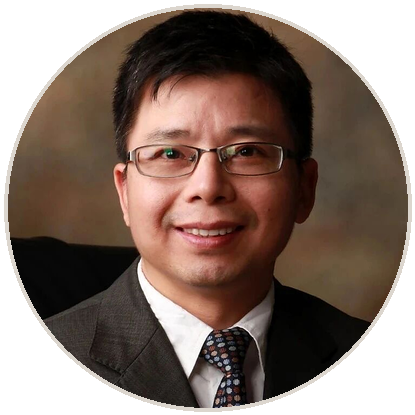
“When we treat calm as something gained and happiness as a bonus from heaven, we can give ourselves to happiness itself, instead of worrying every day about chasing it.”
— Zhao Kuaile
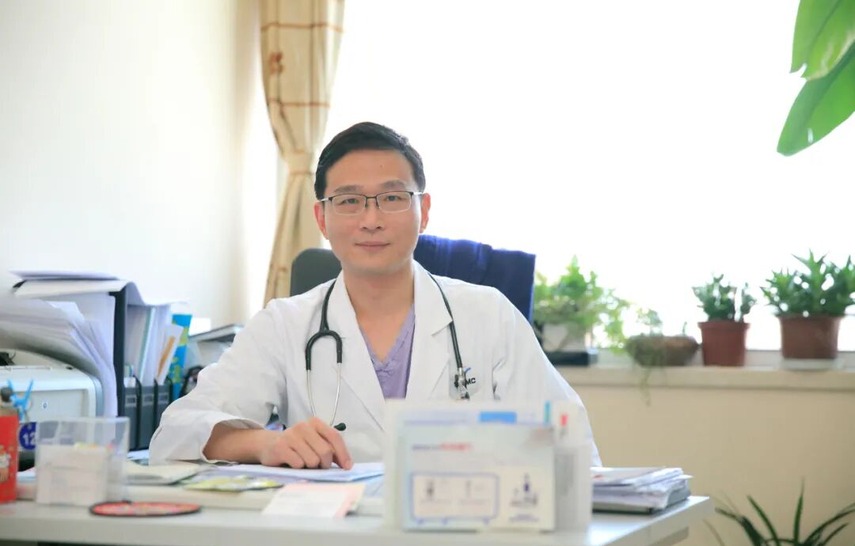
Zhao Kuaile is Director of the Thoracic Division of the Radiation Therapy Center at Fudan University Shanghai Cancer Center, Chief Physician, Professor, and Doctoral Supervisor. He is vice chair of the radiation oncology committee of the Shanghai Anti-Cancer Association and a member of the esophageal cancer committee of the China Anti-Cancer Association. He specializes in radiotherapy and comprehensive treatment for thoracic tumors, including esophageal cancer, lung cancer, and mediastinal tumors.
He has published nearly a hundred papers in journals including the Journal of Clinical Oncology and Nature Communications. His honors include the Meiji Dairies Life Science Award, a second prize of the China Anti-Cancer Association Science and Technology Award, a second prize of the Shanghai Anti-Cancer Association Science and Technology Award, a first prize for scientific and technological progress from the Ministry of Education, and a first prize for scientific and technological progress from Shandong Province.
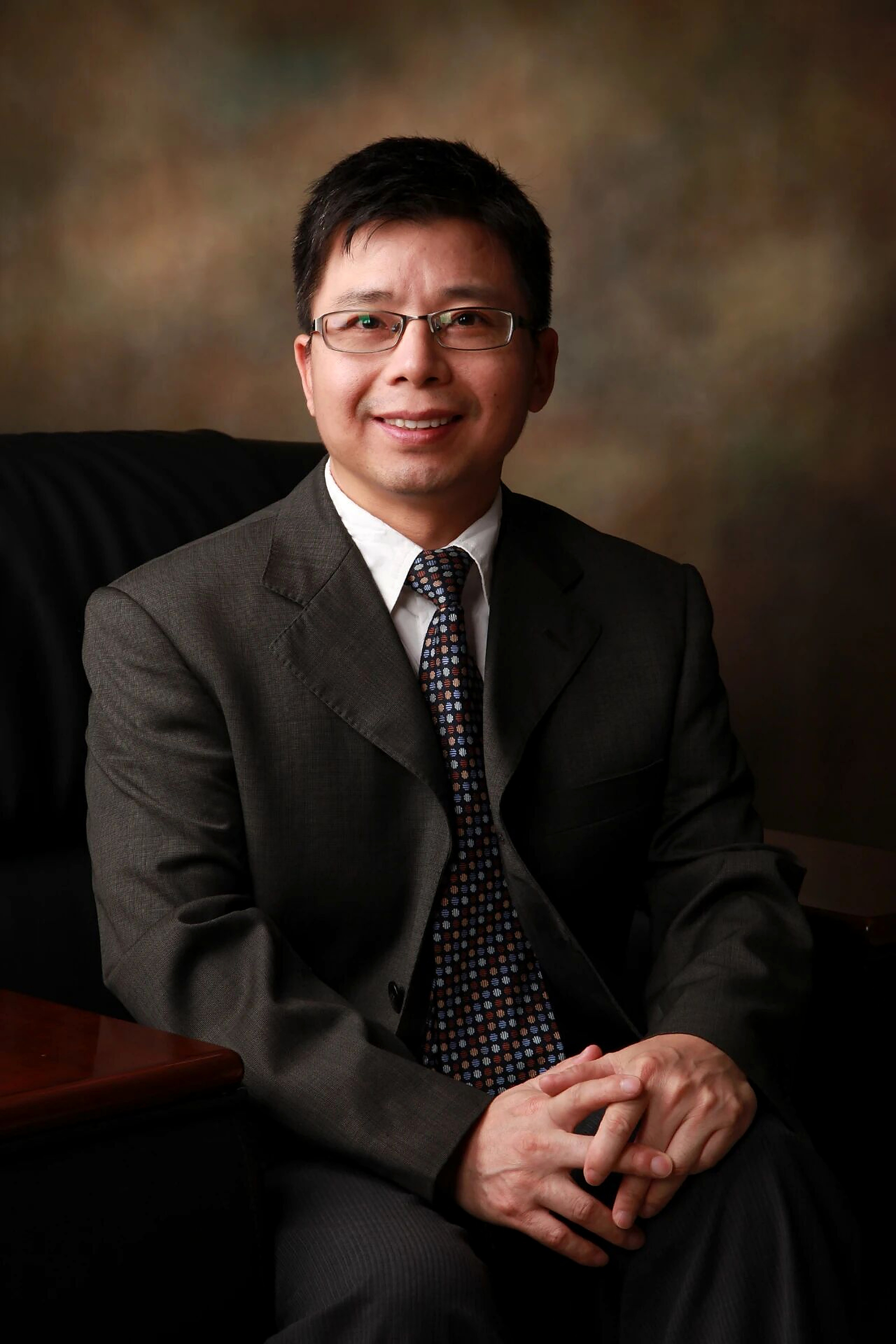
A man whose given name, Kuaile, means “happy” can’t have too much bad luck.
He came out of the Jiangxi countryside and, after twenty years of wind and rain, became one of the leading figures in radiotherapy for esophageal cancer in China. There were difficulties, doubts, and setbacks along the way, as there always are. What has carried him to where he is today, he says, comes down to his name: happiness.
I asked him where his happiness comes from. Few desires, he said, and being easily satisfied. I think it also comes from the simple nature of a farmer’s son, and from a genuine, unadorned passion for what he loves.
He encourages his patients to be happy too. Of the more than a hundred esophageal cancer patients who began with him over a decade ago, a dozen or so remain. Many have gone, and for some a goodbye was the last word. He keeps his grief to himself and teaches people to live well and to live calmly alongside cancer. On countless nights he has buried himself at his desk and in the laboratory, looking for ways to make radiotherapy for esophageal cancer work better. His theory of involved-field irradiation for esophageal cancer met opposition at first, then debate, and finally acceptance and wide clinical use. After years of patient work it found its moment, like jade waiting in its case for the right buyer, and now benefits a great many patients.
I have heard many people talk about happiness, but few understand it as deeply as he does. “When we treat calm as something gained and happiness as a bonus from heaven, we can give ourselves to happiness itself,” he says, “instead of worrying every day about chasing it.”
As a doctor he is mature and confident, open and straightforward. Nothing, he says, is more persuasive than sincerity. Through everything he says runs a quiet acceptance of life and death. He likes to notice the small details of daily life, and they have taught him that happiness, like the passing of years and the growing up of a person, looks simple and silent but takes great patience to watch it slowly grow strong.
“In fact, heaven gives everyone the same share of happiness and misfortune,” he says. “No one always meets happy things, and no one always meets unhappy ones. Happy people choose to remember the happy things and forget the unhappy ones. Unhappy people do the opposite. They feel life is unfair to them and always remember what made them unhappy, and so, little by little, they throw their own happiness away.”
I think everyone has a definition of happiness deep inside, and their own limits. People who understand happiness can want a great deal and can also do without anything, because they are content. They have found what they want, and they know that not everything needs a satisfying ending. Happiness, after all, is what adds flowers to the brocade of a life.

Zhao Kuaile was a happy person from the start.
He was born on a snowy day in 1972 in Ji’an, Jiangxi Province, the sixth child of a farming family. For as long as he can remember he helped with the farm work, raising pigs, herding ducks, planting rice.
“That life was hard, but it nourished you,” he says. “Still, good mountains and good water can’t keep a farmer’s son at home in the end.” He did not want to farm all his life. He longed for a wider world and a steady job that would support a family.
After the university entrance exam he was admitted to Jiangxi Medical College, and he was very content. For a country boy, getting into university at all was great luck. In his five years there, besides keeping up with exams, he had a rich life outside class. His fine calligraphy earned him work writing articles and posters for the student union, and he loved it.
When he graduated in 1994 he was assigned to the radiotherapy department of Jiangxi Cancer Hospital. Some people asked him, puzzled, whether he really meant to stay in a department with no prescribing rights. He just smiled.
At heart he takes things as they come. If there was no other choice, he would settle into it. Besides, it was a stable job, and he did not have to go home to farm, which was good enough.
He is grateful for his three years at Jiangxi Cancer Hospital. Two of its medical physicists came from Peking University and Tsinghua University, the director had a graduate degree in radiation oncology from a leading school, and the work was done to proper standards. In those three years he learned the basics of oncology and radiotherapy and built a solid foundation in clinical radiotherapy.
But he decided to take the graduate entrance exam. “I had made real progress, but since I was small people had expected a lot of me, and I always wanted to be the best I could be.” At Fudan University Shanghai Cancer Center, his master’s supervisor was Professor Shi Xuehui, a renowned expert in radiotherapy for esophageal cancer, and his doctoral supervisor was Professor Jiang Guoliang, a famous radiation oncologist and then president of the hospital.
“Time writes with its pen and the years become chapters,” he says. “I never imagined that with the support of two such respected mentors, a young man from the countryside could reach the highest levels of radiotherapy, especially in esophageal cancer, and step into the front rank of clinical work and research.”
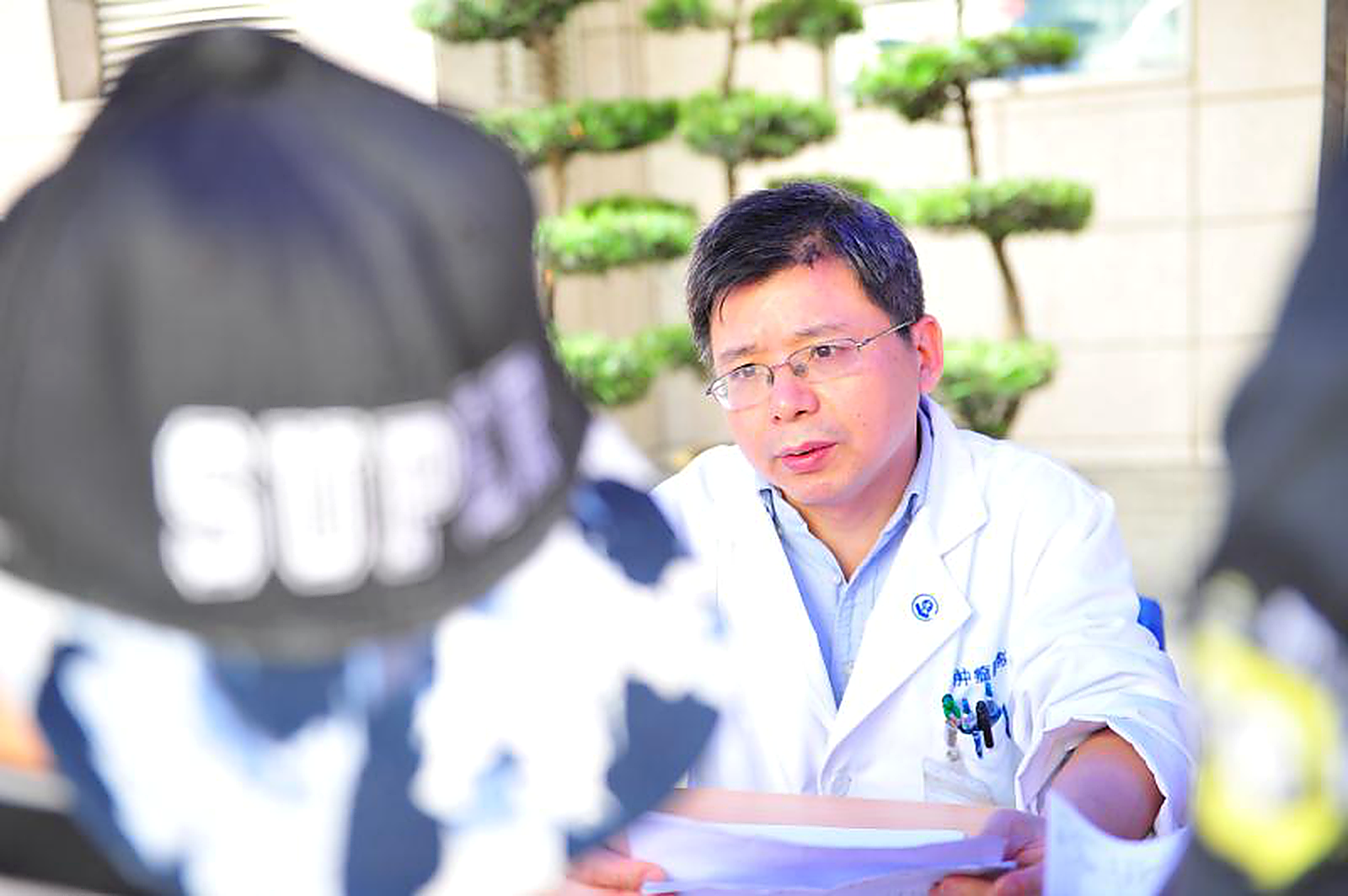
He stayed on at Fudan University Shanghai Cancer Center.
Both his mentors were towering figures in radiotherapy research, and Fudan has a strong research tradition. “They woke up an interest that was already in my genes,” he says. “For a doctor, research isn’t something lofty that floats above clinical work. It is simply the process of summing up clinical work and raising it to a higher level. Research papers are the language doctors use to share experience, and that is very meaningful work.”
He began doing research with his mentors as a graduate student, and their teaching by word and example opened his mind. In 2006 the hospital sent him for a year of further training, during which he completed four projects in six months and published two papers. Later, when he had the chance to do his own research, he found happiness hidden in independent thinking.
“Some people think research is a waste of a doctor’s time. That is because they don’t understand what clinical research is for,” he says. “The research I like to do must be practical, possible to spread, and good for patients. My papers sum up and reflect on my everyday clinical work, and they are the basis for improving my clinical skills.”
Doing research in a free environment seems to be his happiest time: thinking independently, undisturbed, studying what he wants to study. Research ability is not inborn, he says. It needs wide reading and long accumulation, and sometimes a sudden flash of insight.
“Sometimes research isn’t understood, and it is lonely. Its value may only be recognized decades later. If you want to innovate, you have to bear the loneliness. I am grateful to the leaders and colleagues at the hospital and in my department, who have always understood and supported me.”
He also trusts his own ability. His involved-field theory for esophageal radiotherapy drew all kinds of criticism and doubt, but he did not find that painful. He was sure that “precision is a permanent trend.” Today he is gratified that most of the country has accepted the involved-field approach, and more and more patients benefit from it.
When he outlines the radiotherapy target on the computer, he is especially careful and especially sure. He sees it as drawing a battle map of life and death, and his mind must be still.
“Careful preparation at the start means a good result later,” he says. “Drawing the target is never easy. With early esophageal cancer it is normal not to see the tumor clearly, so you have to use more advanced and more complex methods to find it. I don’t allow myself to look away from a hard problem. If you draw carelessly, the treatment will go badly wrong. That must not happen.”
As his reputation has grown, more and more patients seek him out. They want comfort from him, and happiness, and some travel long distances simply because of his name. He is glad of it. His way with patients has always been plain. He never talks down to them or makes things sound mysterious, and as a farmer’s son he can feel their suffering. He explains their illness in everyday language and tells them how far cancer treatment has come, hoping they will not face the disease with the pessimism of the past.
In the 1970s and 1980s, five-year survival for esophageal cancer was below 10 percent. Today it is about 20 percent in the United States, 29 percent in China, and about 34 percent in Japan and South Korea. “Our hospital recently reported five-year survival of 40 percent with definitive concurrent chemoradiotherapy,” he says. He believes esophageal cancer patients in Asia do better than those in Europe and America, perhaps because of differences in tumor biology. As for why survival has improved, “it should be overall progress across everything from diagnosis to treatment, not the progress of any single technique.”
It is hard to find any trace of restlessness in him. In an age of quick success, he believes in doing today’s work as well as he can and living each day well. Research, treatment, seeking the truth, and exploring, he says slowly, are the happy moments of his life.
ShanghaiDoctor.cn: Is life happy for you?
Zhao Kuaile: “I think my state of mind is like my name (laughs). To be honest, I don’t know what the purpose of life is, because this is my first time living my life and I don’t know what the future holds (laughs). But whenever I do one thing well, for example publishing a meaningful study and having the results recognized, I’m truly happy.”
ShanghaiDoctor.cn: Where does happiness come from?
Zhao Kuaile: “Few desires and a strong sense of satisfaction. Someone who grew up on rice porridge is obviously delighted when a holiday brings a table of meat and wine. So everyone’s happiness has a different source. For me, following my heart and doing something worthwhile makes me happiest. But you needn’t be sad when others don’t recognize you. In everything, ask only that your conscience is clear.”
ShanghaiDoctor.cn: Are you content with solitude?
Zhao Kuaile: “Solitude is a kind of peace in the heart. If you are sure of who you want to become, hold firm to that goal and don’t keep looking left and right. Perseverance is a lonely watch. For me, it is easy to be content. Everyone pursues different things. I think the meaning of my life lies in quietly keeping to this work, summing up and reflecting. Solitude and stillness, forgetting both the self and the world, that is what life is really about.”
ShanghaiDoctor.cn: For most doctors, interest and a sense of achievement begin with curing patients. Where does yours come from?
Zhao Kuaile: “Curing patients does give me a sense of achievement. When a patient recovers and goes home I am happy for them, but there is no need to be too happy, because that is my job.”
ShanghaiDoctor.cn: What is the best radiotherapy?
Zhao Kuaile: “With the technology we have, analyzing each patient’s condition and working out the best treatment for it is what matters most. Radiotherapy is not best when you simply add more. It has to be exactly right. In fact everything is like that. The Chinese idea of the golden mean has real wisdom in it.”
ShanghaiDoctor.cn: What is the most important quality for a radiation oncologist?
Zhao Kuaile: “To put it in “big” terms, a doctor’s benevolent heart. I tell my students that a doctor’s fundamental aim is to save patients’ lives, and that fame, position, and honors are only by-products. In truth there is no line between doctor and patient. Today you are the doctor, tomorrow you may be the patient. Anyone who is always calculating gains and losses is not suited to medicine. If we speak only of what a radiation oncologist needs, I would use the word “skills.” You need general knowledge of medical oncology, plus radiation physics and radiobiology, and an even higher standard in anatomy and imaging.”
ShanghaiDoctor.cn: What do you do in your free time?
Zhao Kuaile: “I have very little. Now and then I watch television, and I read some nonfiction.”
ShanghaiDoctor.cn: If you taught a class for medical students, what would it be?
Zhao Kuaile: “If I named the course, it would be “The Great Way Is Simple, and the World You See Comes from the Heart.” I would like to pass on a way of thinking: all things are connected, and the great way is simple. Clinical skills and research papers push each other forward and complete each other. Life and work, too, follow where the heart leads. I hope everyone is happy in life and in work.”
Zhao Kuaile left the rice fields of Jiangxi for a radiotherapy department where some people thought he would not stay. He stayed, and over twenty years his patient, much-doubted idea became standard practice. He still draws every treatment map with a still mind, still tells patients that cancer can be lived with, and still says that happiness is a bonus. Few desires, he says, and a great deal of contentment.
Editor: Chen Qing
If you need any help from Dr. Zhao, be free to let us know at Chenqing@ShanghaiDoctor.cn.
Adapted from the Yewen Renyi (晔问仁医) interview “赵快乐 | 大道至简,境由心生.”
Dr. Zhao Kuaile | Radiation Oncology, and the Great Way Is Simple
Dr. Zhao Yiming | Liver Surgery, and No Overnight Success, Only Perseverance
Dr. Gu Chaoying | Dermatology, and Holding On Because There Is No Other Choice
Dr. Wang Qunshan | Cardiac Electrophysiology, and Meeting the Rising Wind
Dr. Ren Yunyun | Obstetric Ultrasound, and the Work No One Sees
Dr. Qian Yiming | Emergency Medicine, and Neither Joy nor Fear on the Great Tide
Dr. Wang Xudong | Craniomaxillofacial Surgery, and Years Written into Chapters
Wang Xiaoning | Operating Room Nursing, and a Grace Like the Orchid
Dr. Li Guichao | Radiation Oncology, and a Peach Blossom Spring in the Heart
Dr. Lu Yanan | Pediatric Heart Surgery, and Feeling Another’s Pain as One’s Own
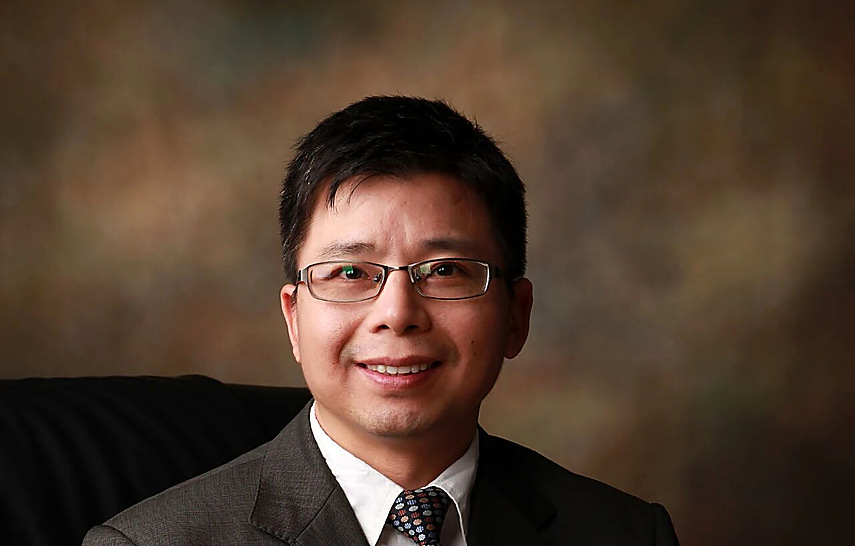
Dr. Zhao Kuaile | Radiation Oncology, and the Great Way Is Simple
Dr. Zhao Yiming | Liver Surgery, and No Overnight Success, Only Perseverance
Dr. Gu Chaoying | Dermatology, and Holding On Because There Is No Other Choice
Dr. Wang Qunshan | Cardiac Electrophysiology, and Meeting the Rising Wind
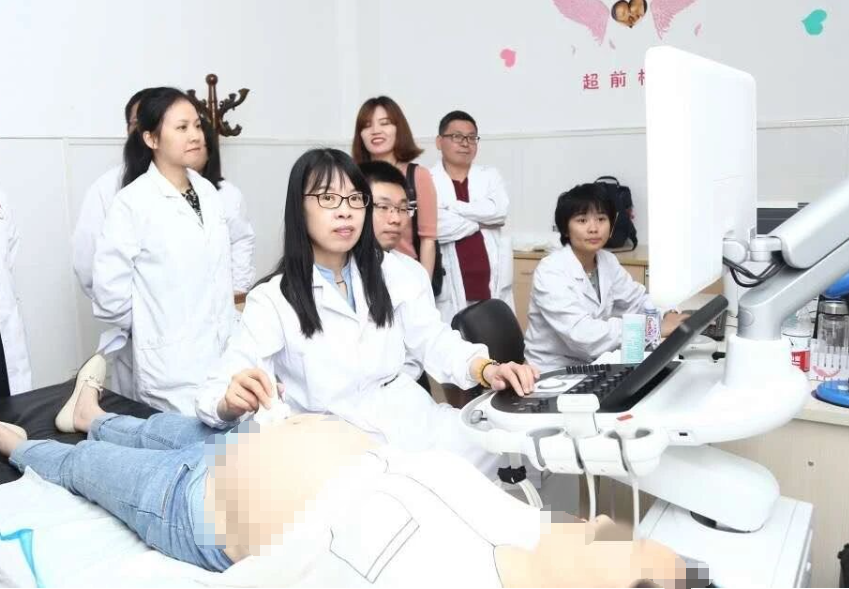
Dr. Ren Yunyun | Obstetric Ultrasound, and the Work No One Sees
Dr. Qian Yiming | Emergency Medicine, and Neither Joy nor Fear on the Great Tide
Dr. Wang Xudong | Craniomaxillofacial Surgery, and Years Written into Chapters
Wang Xiaoning | Operating Room Nursing, and a Grace Like the Orchid
Dr. Li Guichao | Radiation Oncology, and a Peach Blossom Spring in the Heart
Dr. Lu Yanan | Pediatric Heart Surgery, and Feeling Another’s Pain as One’s Own
Copyright © 2023 Yewen Renyi & ShanghaiDoctor.cn (This website is a non - profit medical humanities platform. The information contained herein is solely for biographical and historical purposes and does not constitute any medical advice.) 沪ICP备2023005392号-2 XML 沪公网安备31010902100835号
 中文
 English
 Español
 沪公网安备31010902100835号
