ShanghaiDoctor - Where China's Healing Wisdom Shapes Modern Medicine

Update time:2026-08-08Visits:2537
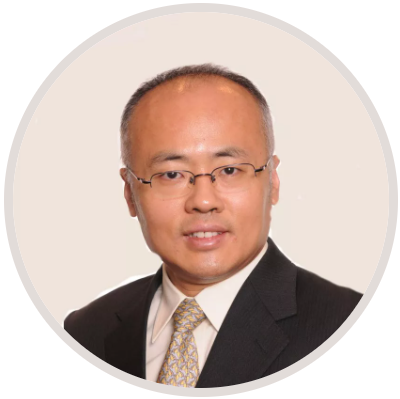
Professor & Director Department of Hypertension, Ruijin Hospital Shanghai Jiao Tong University School of Medicine Director, Shanghai Institute of Hypertension
“We must ensure that 50% of hypertension patients receive treatment and achieve target blood-pressure levels.”
— Wang Jiguang
Wang Jiguang, M.D., Ph.D., is Professor and Director of the Department of Hypertension at Ruijin Hospital, Shanghai Jiao Tong University School of Medicine, Director of the Department of Hypertension at Ruijin Hospital North, and Director of the Shanghai Institute of Hypertension. He is an Executive Committee Member of the International Society of Hypertension, President of the Asia-Pacific Society of Hypertension, President of the Asian Artery Society, and President of the Chinese Hypertension League.
He also serves as Co-Editor-in-Chief of Pulse, Associate Editor of Hypertension and Hypertension Research, Deputy Editor-in-Chief of the Chinese Journal of Cardiology, and Associate Editor of the Chinese Journal of Hypertension.
His clinical and research work centers on the diagnosis, treatment, and long-term management of hypertension, with particular expertise in resistant hypertension and hypertension complicated by target-organ damage. Principal research interests include cardiovascular clinical trials, natural population studies, cardiovascular measurement technology, vascular structure and function, and population genetics.
As of May 2018 he had published 359 English-language original articles or reviews and 140 Chinese-language original articles and reviews. Over more than two decades he has helped shape both national and international approaches to hypertension control, including contributions to food-labeling standards, tobacco-control measures, and community fitness infrastructure that have been incorporated into Shanghai’s public-health planning.
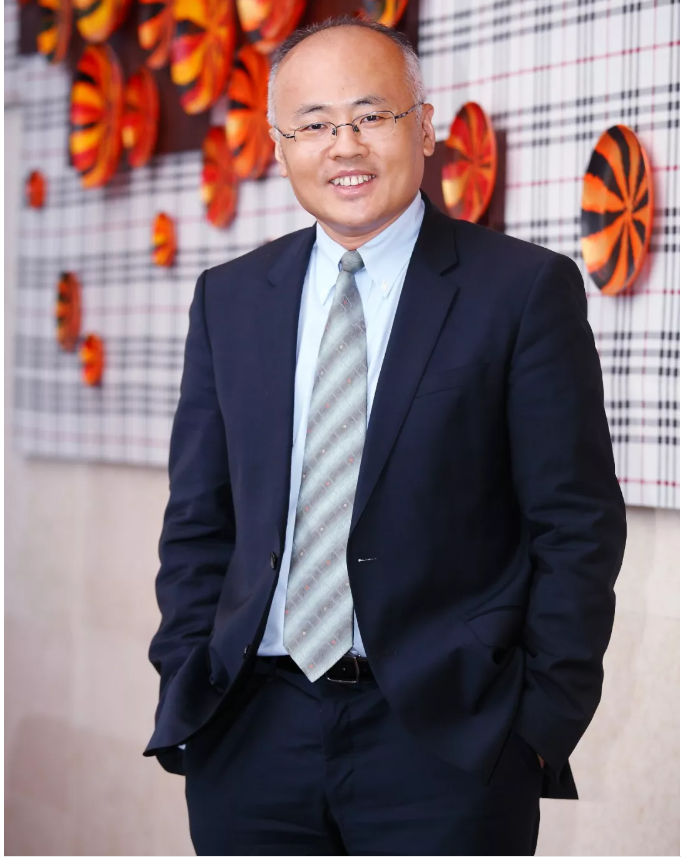
“Some things are clear from the very start,” Wang reflects. “Putting on the white coat means that for the rest of your life you live for the health of your patients. You must think hard about how to make patients live longer—and live well. This is the attitude of a medical scientist. With this attitude, even if the techniques are not immediately feasible, at least the road ahead is bright, and you will not do the wrong things.”
From the moment he entered medicine he was drawn to research rather than pure clinical volume. “I could perform surgery, but I calculated that even if I operated for a lifetime that would only amount to about 3,000 procedures. Research suits me better and may be more meaningful—it can change society and change populations.”
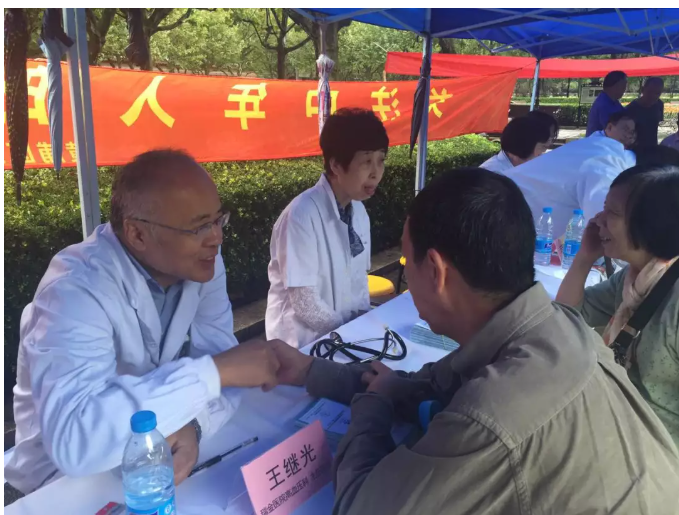
Wang’s early path was marked by both determination and unexpected turns. After ranking first in an examination yet missing an opportunity that was not his fault, he returned to a small hospital in his hometown in Henan to work as an internist. The lighter clinical load gave him time to prepare for postgraduate study. A year later he entered the cardiology department of Beijing Fuwai Hospital, focusing on hypertension.
There he met Professor Liu Lisheng, whose influence shaped his entire career. At a time when many young cardiologists sought the drama of acute critical care, Professor Liu had deliberately chosen hypertension. One of her statements has stayed with him: “Doing a meaningful thing does not depend on what you do, but on how you do it. You don’t have to compete with others for what seems to be the best.”
Under her guidance he declined an invitation to join the cardiac catheterization team after his master’s degree and instead committed himself to a major national project she led: the Clinical Trial of Antihypertensive Treatment for Isolated Systolic Hypertension in the Elderly in China. It was one of the first large-scale cardiovascular research projects launched after China’s reform and opening. Many classmates declined because a collective project offered little individual visibility. Wang chose to stay.
The trial occupied him for a full decade—2,370 weeks from data collection through final publications. “It truly required great sacrifice, patience, and persistence that did not count gains and losses,” he says. “But this was my choice. Ten years to sharpen one sword; as long as the work is accomplished, there is nothing to regret.” The results gained international recognition and domestic awards.
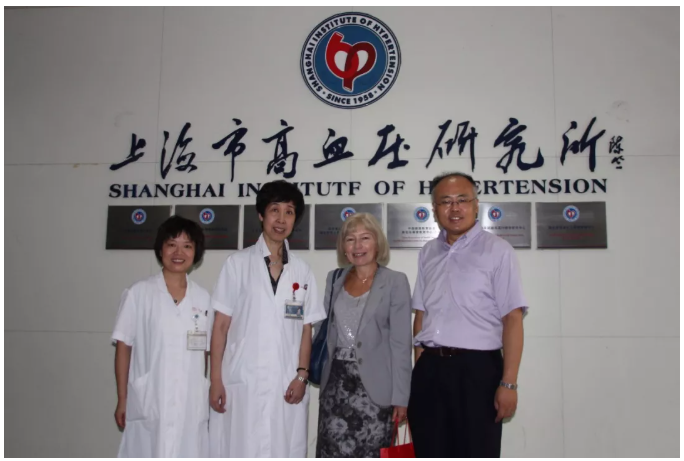
In 1996, after domestic data work was completed, Wang was sent to Europe to finish the remaining analyses on stronger research platforms. He spent the next seven years studying and working at a leading European heart center. The experience sharpened his understanding of the gap in depth of hypertension research, prevention awareness, and disease management that then existed between Europe and China.
He absorbed both scientific methods and a research ethos that balanced curiosity with social utility. Life was comfortable, yet he found it too idle for his ambitions. When he lectured across Europe he noticed that audiences were most interested in China’s data and challenges. Gradually the conviction grew that returning home would allow him to achieve more.
Objective obstacles delayed a return to Fuwai Hospital. In 2002 a series of meetings in Shanghai with successive directors of the Shanghai Institute of Hypertension opened another door. They recognized his strengths and actively encouraged him to join Ruijin Hospital.
As a northerner, Wang had not initially considered settling in the south. Differences in dialect and daily habits required adjustment. He came to see the discomfort as an internal conflict of thinking styles rather than a matter of right or wrong. On 26 August 2003 he formally took up his post at the Shanghai Institute of Hypertension and Ruijin Hospital’s Department of Hypertension.
The department is one of the earliest dedicated hypertension specialties in China, with nearly five decades of history. Together with the Institute it forms an interdisciplinary platform that integrates clinical care and research and carries substantial influence both nationally and internationally. Today the team includes some twenty clinicians at all levels, among them nationally recognized experts, and operates specialized outpatient clinics and a 35-bed ward focused on difficult and severe hypertension.
Over the years the group has developed comprehensive diagnostic pathways for secondary and resistant hypertension, including plasma renin activity, urinary catecholamines, and genetic testing for monogenic forms. Emphasis is placed on comprehensive management of hypertensive emergencies and complications involving the heart, brain, and kidneys, as well as hypertension accompanied by metabolic syndrome or cerebrovascular disease.
Wang has also worked beyond the hospital walls—contributing professional advice that helped shape food-labeling rules, tobacco-control measures, and the provision of fitness facilities within walking distance of every residential community, a recommendation later written into Shanghai’s Five-Year Plan.
China currently has more than 200 million people with hypertension—roughly one in five adults. More than half remain unaware of their condition; among those treated, only about one-third reach target blood pressure. The national control rate stands near 15%.
Aligned with the national Healthy China 2030 initiative, Wang has set a clear, evidence-based target: by 2030, 50% of people with hypertension should both receive treatment and achieve controlled blood pressure. This would require raising the treatment rate among detected cases from roughly 45% to over 70% and the control rate among those treated from about 30% to 70%.
“My proposed goal is evidence-based, not wishful thinking,” he emphasizes. “While we cannot completely cure hypertension, we can control it, slow its progression, and reduce the incidence of major complications. If the target is met, the incidence of hypertensive complications in China could be reduced by about half.”

ShanghaiDoctor.cn: What are the characteristics of the Hypertension Department?
Wang Jiguang: Hypertension itself can be seen as a discipline, and it is also a sub-discipline. Many other departments can treat hypertension from different angles, but as a specialized hypertension department we focus more on the diagnosis and treatment of secondary hypertension and resistant hypertension, targeting patients whose treatment was delayed or whose conditions are more complex.
Our patients are mainly of two types. One type has hypertension due to a specific disease, such as adrenal disease—we contribute a large number of patients to the urology department every year. Once the underlying cause is addressed by surgery or other treatment, the hypertension is often completely resolved. The other type is resistant hypertension. These patients are generally in serious condition. Although they have not yet had a myocardial infarction, heart failure, or stroke, these problems could happen at any time. We want to delay or prevent these events, allowing patients to live longer and with better quality of life.
ShanghaiDoctor.cn: Can you briefly introduce the incidence of hypertension? How has the situation in Shanghai changed in recent years?
Wang Jiguang: Currently there are more than 200 million hypertension patients in China, and one in every five adults has hypertension. More than half of the affected population still does not know they have it. Among patients receiving antihypertensive treatment, two-thirds have not reached their target blood-pressure levels. However, the harm caused by hypertension in Shanghai is on a declining trend, mainly thanks to medical security, and our efforts have also played a role. We communicate with government colleagues from a professional perspective about what should be done and which approaches are effective. Shanghai ranks first in the country in average life expectancy, and over the past five years it has increased further—a concrete reflection of progress in the prevention and treatment of major diseases in the elderly.
ShanghaiDoctor.cn: Can hypertension only be controlled but never cured?
Wang Jiguang: Hypertension is divided into primary and secondary forms. Secondary hypertension has a clear etiology and clinically often presents as resistant hypertension, carrying a high risk of cardiovascular and cerebrovascular complications. As long as the cause is promptly and actively removed or controlled, hypertension as a symptom can be cured or significantly alleviated, and cardiovascular harm greatly reduced. Primary hypertension usually has an unknown etiology, or even if the cause is clear it cannot be eradicated; the only option is to treat the elevated blood pressure itself. In short, hypertension caused by specific disease conditions can be cured, while all other patients must use continuous medication without interruption.
ShanghaiDoctor.cn: What unhealthy lifestyle habits can lead to hypertension?
Wang Jiguang: There are three main contributors to primary hypertension: aging and arterial stiffness; work and life stress; and poor diet or overnutrition. All are closely related to daily life and can be addressed, though with difficulty. We try to provide scientific evidence for solutions—such as reducing salt and sugar intake through food labeling, smoking-cessation regulations, and building fitness facilities in every community.
ShanghaiDoctor.cn: In the years you have studied hypertension, where do you find your greatest sense of achievement?
Wang Jiguang: During rapid economic development, hypertension has become the number-one threat to health. Although we cannot completely prevent or reverse its major harm, we have reduced and lessened that harm. At the Hypertension Institute of Ruijin Hospital our scientific research has achieved meaningful results, and our research and clinical platforms have made substantial progress.
ShanghaiDoctor.cn: What are your future goals?
Wang Jiguang: Under the national Healthy China 2030 framework we have set clear targets. By 2030 we want half of all people with hypertension to receive treatment and reach target blood pressure: raise the treatment rate after detection from about 45% to over 70%, and raise the control rate after treatment from the current roughly 30% to 70%. The present national control rate is about 15%; reaching 50% overall would be a major advance. If achieved, the incidence of hypertensive complications could be reduced by approximately half.
ShanghaiDoctor.cn: Where do you think the current bottleneck in hypertension research lies?
Wang Jiguang: The problem of innovation capacity. We face a great challenge: there are not enough talents, and innovation is more difficult. We need people who are both intelligent and possess the motivation and ability to innovate. Attracting and retaining such talent is a huge challenge.
ShanghaiDoctor.cn: Where does innovation in the hypertension field lie?
Wang Jiguang: Two major issues demand attention. The first lies outside the hospital: achieving high awareness and treatment rates. This requires new technical capabilities, so we have applied Internet-plus concepts to build smart blood-pressure kiosks. People can take their own readings; each measurement is transmitted to a big-data cloud platform that generates intelligent clinical assessments. The second issue lies within the hospital. In the future we hope to classify hypertension by etiology and offer the most appropriate treatment for each underlying cause. At present drug therapy remains largely empirical, with limited evidence to guide etiology-specific choices.
ShanghaiDoctor.cn: Where do you believe the core value of medicine lies?
Wang Jiguang: Its ultimate philosophy is human health. Helping every person live longer, and with a better quality of life, is the eternal goal of medicine—that is the guiding principle. A doctor must think this way from the very first day of practice; otherwise mistakes will be made. Everything we do may have technical shortcomings, but our philosophy must be correct.
From a small hospital in Henan to a decade-long national trial, from European research platforms back to Shanghai, Wang Jiguang has consistently chosen the path that prioritizes long-term meaning over immediate recognition. The 50% control target he advocates is ambitious, yet grounded in evidence and method. For him, the white coat has always meant one thing: helping people live longer and live better.
Editor: Chen Qing
If you need any help from Dr. Wang, please email directly at Chenqing@ShanghaiDoctor.cn.
Dr. Shi Yuling | Psoriasis, and Spring Mountains Beyond the Plain
Dr.Ying Chunmei | Laboratory Medicine, Renewed a Little Every Day
Dr. Zhang Lei | Children's Airways, and a Preference for Being Plain
Dr. Chen Tongyu | Chest Surgery Without a Tube, and No Claim to Greatness
Dr. Hua Xiaolin | High-Risk Obstetrics, and a Child Worth Keeping
Dr. Shen Chun | Neonatal Surgery, and a Vow That Makes No Speech
Dr. Yang Ji | A Dermatologist Who Measures the Years by Who Gets Better
Dr. Chen Gong | Children's Bile Ducts, and a Future He Chose Himself
Dr. Luo Zhiguo | An Oncologist Still Hoping for One More Reunion
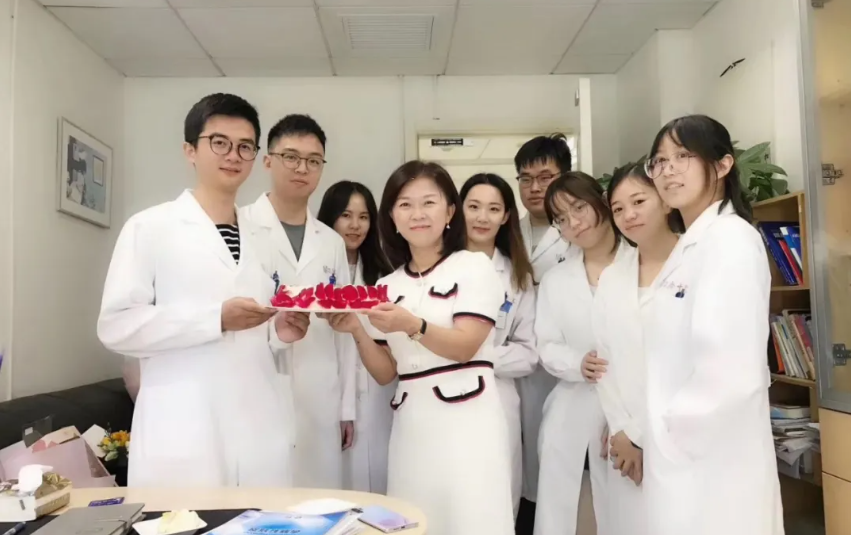
Dr. Shi Yuling | Psoriasis, and Spring Mountains Beyond the Plain
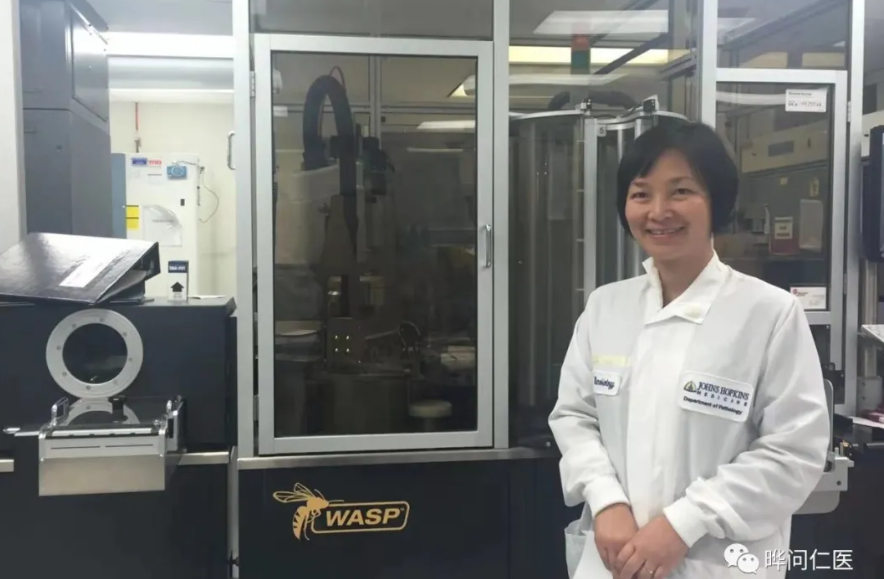
Dr.Ying Chunmei | Laboratory Medicine, Renewed a Little Every Day
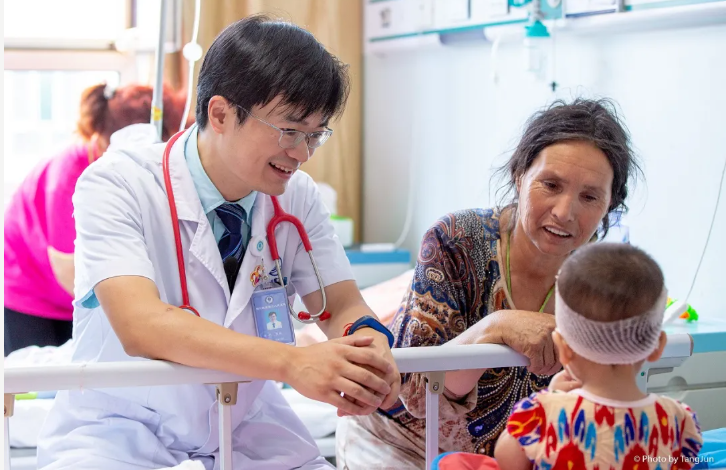
Dr. Zhang Lei | Children's Airways, and a Preference for Being Plain
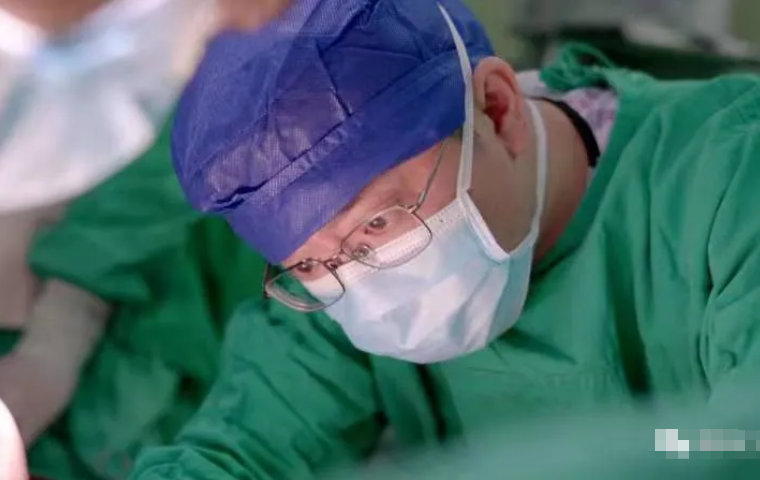
Dr. Chen Tongyu | Chest Surgery Without a Tube, and No Claim to Greatness
Cui Jie | An Infectious-Disease Nurse Who Kept Walking In
Dr. Hua Xiaolin | High-Risk Obstetrics, and a Child Worth Keeping
Dr. Shen Chun | Neonatal Surgery, and a Vow That Makes No Speech
Dr. Yang Ji | A Dermatologist Who Measures the Years by Who Gets Better
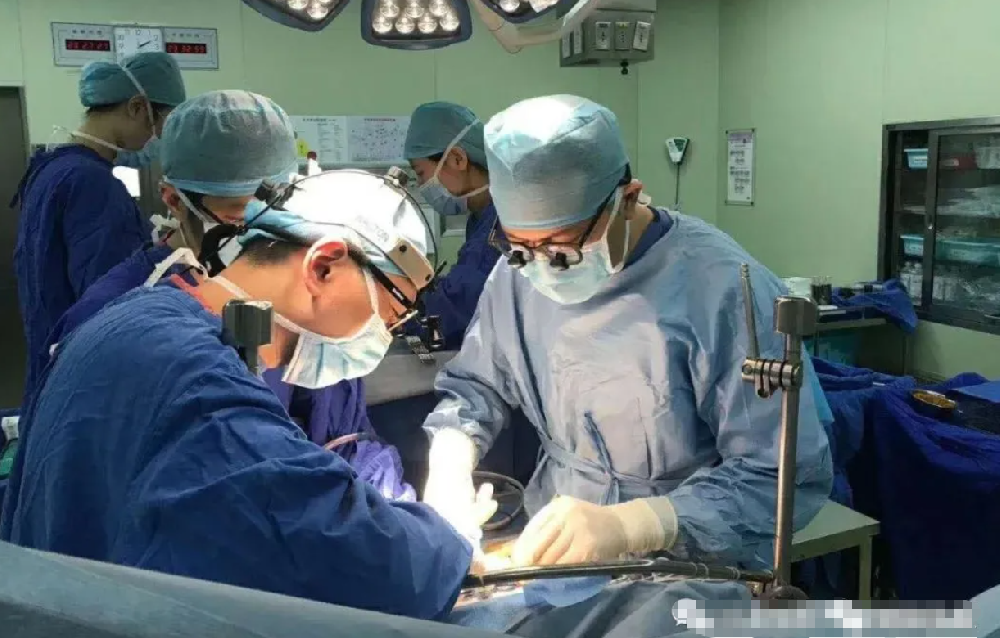
Dr. Chen Gong | Children's Bile Ducts, and a Future He Chose Himself
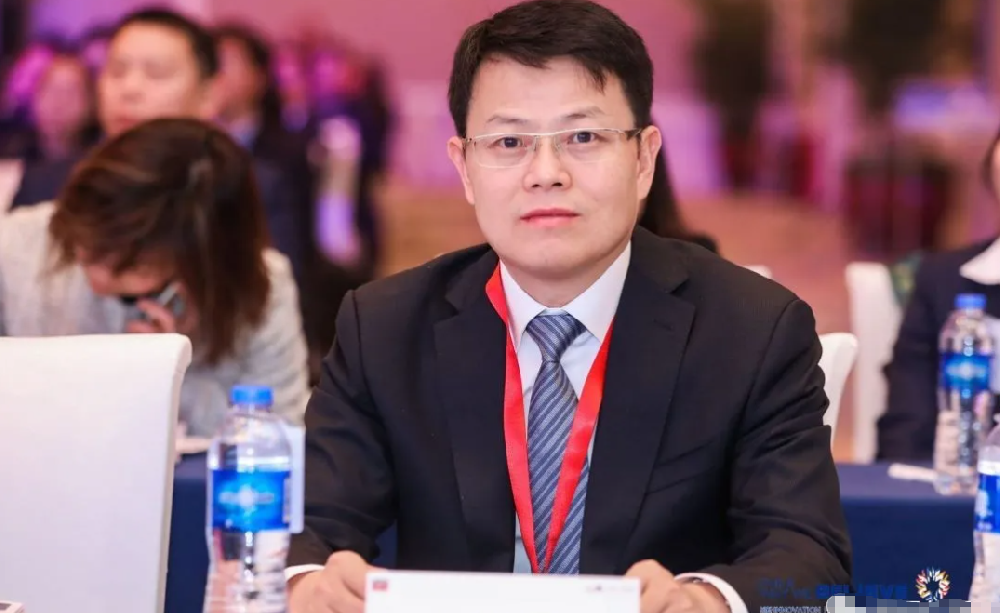
Dr. Luo Zhiguo | An Oncologist Still Hoping for One More Reunion
Copyright © 2023 Yewen Renyi & ShanghaiDoctor.cn (This website is a non - profit medical humanities platform. The information contained herein is solely for biographical and historical purposes and does not constitute any medical advice.) 沪ICP备2023005392号-2 XML 沪公网安备31010902100835号
 中文
中文 English
 Español
 沪公网安备31010902100835号