ShanghaiDoctor - Where China's Healing Wisdom Shapes Modern Medicine

Update time:2026-09-27Visits:75
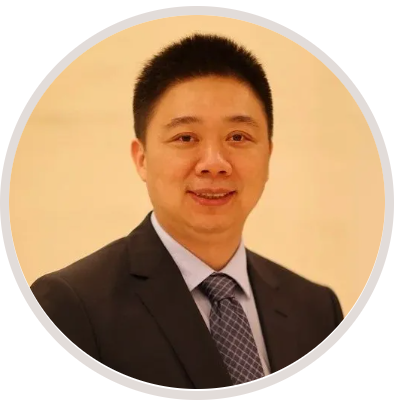
“Sometimes a person needs a bit of stubborn simplicity.”
— Wang Chaoyang
Wang Chaoyang is Chief Physician, Professor, and Doctoral Supervisor. At the time of this interview he led fundus disease at the Department of Ophthalmology, Shanghai Xinhua Hospital, affiliated with Shanghai Jiao Tong University School of Medicine—a national center for orbital disease and ocular tumors under Fan Xianqun. His week is built around the vitreous and the retina: complex detachment, diabetic retinopathy, severe trauma, macular disease, pediatric retina, complicated cataract, and the internal resection of uveal melanoma.
He earned a medical doctorate from Zhejiang University School of Medicine in 2009, trained as a vitreoretinal surgeon at Xinhua Hospital, and completed a postdoctoral period at the University of Florida College of Medicine from 2012 to 2014. He has served as deputy head of the vitreoretinal group of the Shanghai Ophthalmology Society and as a member of the ocular-trauma group of the Chinese Medical Association. He has led several National Natural Science Foundation projects, published SCI papers as first or corresponding author, and co-edited Minimally Invasive Vitreous Surgery for Macular Diseases and Vitreous Surgery for Diabetic Retinopathy, later used as Chinese Medical Association training material.
In 2019 his log included more than two thousand operations—more than twelve hundred vitrectomies among them—more than three hundred cataracts, more than six thousand specialty visits, and more than six hundred intravitreal injections. Four operating days a week often ran past midnight; he was back at seven.
The early years under a demanding department head at Xinhua were, in his word, a kind of purgatory: uncommon cases stacked until the fundus made sense and the hands caught up. Florida showed him a different tempo. Chinese cataract lists can finish a case in ten minutes; American colleagues often took ten to twenty, every step written as if it could not be otherwise. He came home with that lesson and, at Fan Xianqun’s invitation, took the fundus list at the Ninth Hospital.
Ophthalmology has many rooms. He stayed in the one he thinks has both width and depth. Diabetic retinal disease touches tens of millions of people in China; age-related macular degeneration is the leading cause of legal blindness in much of Europe and North America. Shop talk among fundus surgeons runs a joke that only vitrectomy is supreme. The procedure, born in the early 1970s, opened eyes that older operations could not reach. The danger sits where the light does not: proliferative vitreoretinopathy can be pushed toward vanishing and still not vanish. Diabetic work also refuses to be only a surgeon’s problem. Internists and patients have to hold the sugar, or the most elegant retina still fails.
Two habits, he says, matter more than instruments: diligence, and a humility that treats disease as larger than the person holding the pick. Ninety percent of what a human takes in comes through the eye; binocular blindness sits, in many patients’ ranking, just behind death. He describes an operation as repairing a cracked antique, fixing a failed bulb, or interrupting a symphony the disease is trying to finish. Students say he treats people well. His own sentence is cooler: not lifted by praise, not sunk by a private loss; do the case so that you can sleep.
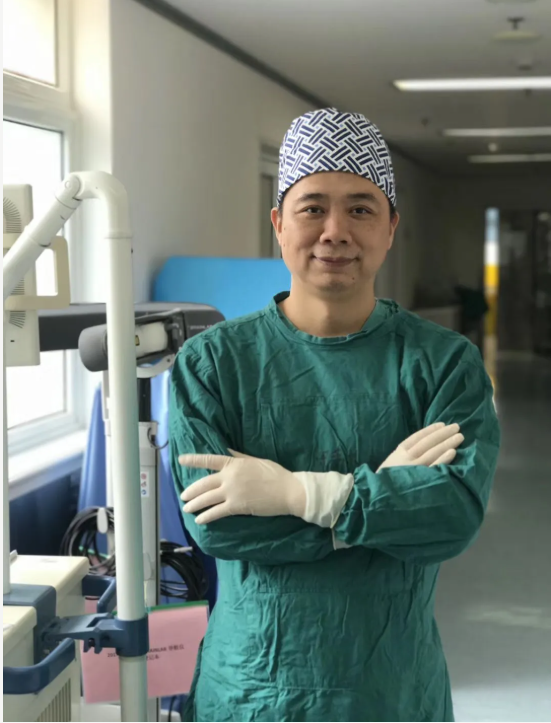
Uveal melanoma is the most common primary intraocular cancer in adults, more frequent in people of European ancestry than in East Asian cohorts, and still deadly after the eye is gone if it has already seeded the liver or lung. Chemotherapy has little to offer; the radiation dose required is roughly twice that for lung cancer. In Britain and the United States, plaque brachytherapy is first-line; globe-sparing local resection is done at only a handful of centers. Wang combines plaque radiation with an internal cut that shrinks the dose and the injury to retina and nerve. About a hundred such operations a year put the Ninth Hospital near the top of the country’s volume; he says some eighty percent of those patients keep the globe.
Bertil Damato, then at Oxford and later at the University of California, San Francisco, was among the first to keep the eye by resecting choroidal melanoma. Wang wrote to him with photographs. The reply came in four hours: the work was good, and he would come. The pandemic cancelled the visit. The method remained.
Another problem he would not leave to the usual syringe: retinal-artery occlusion after a badly placed cosmetic injection around the eye—an “eye stroke.” He uses a needle of about fifty microns, thinner than the central retinal artery, to put a thrombolytic inside the globe. A young woman who had gone dark after filler recovered light perception. A branch occlusion returned to 20/20. He does not want the rest of a career to be only more of the same list. Retinitis pigmentosa, inherited retinal disease, and late macular degeneration ask for gene therapy or artificial vision; he worked on gene therapy in Florida and has been part of a project that sits a chip in a blind eye the way a camera sits on a satellite. Clinical questions first, he says. Patients teach. Engineers answer.
ShanghaiDoctor.cn: You have said that in places we cannot see, disease is still changing the tissue, and that technique can shrink those changes?
Wang Chaoyang: You can drive the risk toward vanishing. You cannot make it zero. Our retinal-detachment success rate is about ninety-five percent; many series abroad sit between eighty and ninety. Why not a hundred? The retina is laid back and the tear is lasered, and then a particular constitution grows membranes—proliferative vitreoretinopathy—the way some skin grows keloid.
Wang Chaoyang: Diabetic retinopathy is a systems problem. The retina was healthy; sugar made it sick. You flatten it once. Diabetes is still there. If the patient does not hold the sugar, the next surgery is carving on a machine that is still breaking. I can leave a retina that looks clean and the patient still cannot see, because the optic nerve is already damaged. It is a bulb whose filament is repaired and whose wiring is not. There is no pick for that. People who come early, and who listen, do better. Duration of diabetes is the other clock.
ShanghaiDoctor.cn: And uveal melanoma?
Wang Chaoyang: It is the most common intraocular tumor in adults and it has a racial pattern—common in white populations, less so in Asian ones. Even in Britain only a few centers do globe-sparing work. Ours is known in eastern China. Damato, who first kept the eye by resecting from the outside, later directed ophthalmology at UCSF. I cut from the inside: a smaller opening, a harder operation. I wrote and sent pictures. He said the work was strong and he would visit. Then the pandemic came.
Wang Chaoyang: Ninth Hospital is a national center for ocular tumors and orbital disease. Large Western trials showed long ago that taking the eye out does not cut metastasis or death compared with plaque radiation. Here, for years, the default was still enucleation—habit, and the climate of practice. After the eye is gone the tumor can still go to liver and lung. There is even a mortality peak around eighteen months in some enucleated series. No good chemotherapy. Radiation doses are brutal. We do about a hundred melanoma operations a year. That volume is near the top of the country. I am grateful for the referrals. About eighty percent keep the globe. Foreign papers say keeping the eye can keep some sight and may add life. There is still a long unknown.
ShanghaiDoctor.cn: Is globe-sparing surgery the best you can honestly offer?
Wang Chaoyang: For the patients we select, yes—the relatively best option we have.
ShanghaiDoctor.cn: In ten years the field has changed. What did the new standards actually change here?
Wang Chaoyang: Severe diabetic disease used to walk into neovascular glaucoma after vitrectomy in about seven percent of cases—blindness plus pain plus pressure. Drugs have taken most of that away. When I started, a vitrectomy could run two hours, or five or six. I have heard of seven. A nurse once heard crying at the table; it was the surgeon. My first melanoma took six hours, including the radioactive plaque and a lead apron. Now it is two or three. Macular degeneration has drugs that work, and they are in the insurance list. The era of only hands before the case and only hands after it is over. You are less often simply lost.
ShanghaiDoctor.cn: How much of that change is the doctor?
Wang Chaoyang: Joint work—and engineering. Doctors name the need. Patients teach the rest.
ShanghaiDoctor.cn: What should the relationship with patients be?
Wang Chaoyang: I try to be easy to reach. Couples come together; three generations; neighbors send neighbors. Humility is not a slogan. The fundus list at the Ninth Hospital was thin when I arrived. You stay with the first reason you came.
ShanghaiDoctor.cn: You have called some of these events an “eye stroke.”
Wang Chaoyang: Some are primary arterial occlusions. Some follow a cosmetic injection that pushed material the wrong way. The fifty-micron needle lets a thrombolytic in from inside the globe. A girl who went blind after filler got light perception back. A branch occlusion went to 1.0. The papers will follow.
ShanghaiDoctor.cn: Clinic, research, teaching—how do they sit?
Wang Chaoyang: Clinic is the floor. A surgeon cannot live in the laboratory. Research should start from a problem you actually meet: a new tool, a fight between two treatments. Stay inside what you can do well.
ShanghaiDoctor.cn: You co-edited books on macular and diabetic vitrectomy. Why standardize a new operation?
Wang Chaoyang: I have not thought about the philosophy. I think about making a method work, then teaching it. Ask me again in ten years. Each term we have thirty or forty visiting doctors, three terms a year. That is the teaching.
ShanghaiDoctor.cn: Artificial intelligence in the eye?
Wang Chaoyang: I have a Shanghai smart-health project on retinopathy of prematurity and retinoblastoma. It is early. Three uses are already obvious: screening that saves hands, prognosis from large sets, and robots that cut. I want the middle one—a glance that already knows how the eye will go.
ShanghaiDoctor.cn: Where should the field go?
Wang Chaoyang: Institutions, tools, science, daily practice—all still incomplete. I operate more, and more easily, and that is a trap. Retinitis pigmentosa, inherited disease, late macular degeneration: gene therapy or a chip. I did gene work in the United States. For what surgery cannot finish, those are the remaining doors.
ShanghaiDoctor.cn: What is medicine worth, from an ophthalmologist’s chair?
Wang Chaoyang: We are lucky, fundus surgeons especially. The same operation in different hands is not the same operation. There is a craft in it. The tools now match what people use abroad, and the volume is here. Gratitude is the right mood. Ophthalmology is both medicine and surgery; a fundus doctor is supposed to own both, and both ends of the eye. Surgery is only one treatment, and often the simplest cases are the ones it can finish. For the rest you talk. Patients are afraid because they have never stood in this room before.
ShanghaiDoctor.cn: What are you like away from the table?
Wang Chaoyang: I read. Not only medicine. Strange Tales from a Chinese Studio, Du Fu. Closing the door on a snowy night with Liaozhai open is another way to come down.
Wang Chaoyang’s title is a classical fragment about flowers once hidden in the eye. His working metaphors are plainer: a cracked antique, a failed bulb, a symphony you interrupt. Vitrectomy will not make proliferative scar go to zero. A clean retina will not save a nerve that diabetes has already taken. An eye with melanoma can sometimes be kept. A girl blinded by filler can sometimes see light again. The rest—gene therapy, a chip, a model that reads the future of an infant’s retina—is the work he does not want to trade for a more comfortable list. Stubborn simplicity, he calls it. The table is still the place he meant when he thought he might build bridges instead.
Editor: Chen Qing
If you need any help from Dr. Wang, please be free to let us know at Chenqing@ShanghaiDoctor.cn.
Dr. Yuan Gongjie | Children's Smiles, and the Orthodontist Who Still Tells Stories
Dr. Wang Chaoyang | Vitrectomy, and Flowers Once Hidden in the Eye
Dr. Zhao Jinhua | Nuclear Medicine, and the Flowers Along the Road
Dr. Shi Yuling | Psoriasis, and Spring Mountains Beyond the Plain
Dr.Ying Chunmei | Laboratory Medicine, Renewed a Little Every Day
Dr. Zhang Lei | Children's Airways, and a Preference for Being Plain
Dr. Chen Tongyu | Chest Surgery Without a Tube, and No Claim to Greatness
Dr. Hua Xiaolin | High-Risk Obstetrics, and a Child Worth Keeping
Dr. Yuan Gongjie | Children's Smiles, and the Orthodontist Who Still Tells Stories
Dr. Wang Chaoyang | Vitrectomy, and Flowers Once Hidden in the Eye
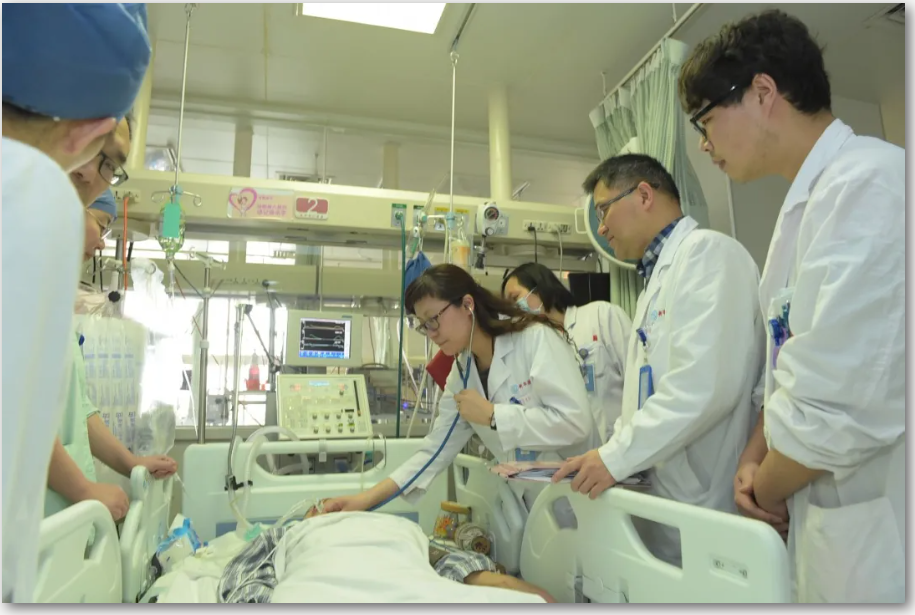
Dr. Fei Aihua | Emergency Medicine, and Striving to Win
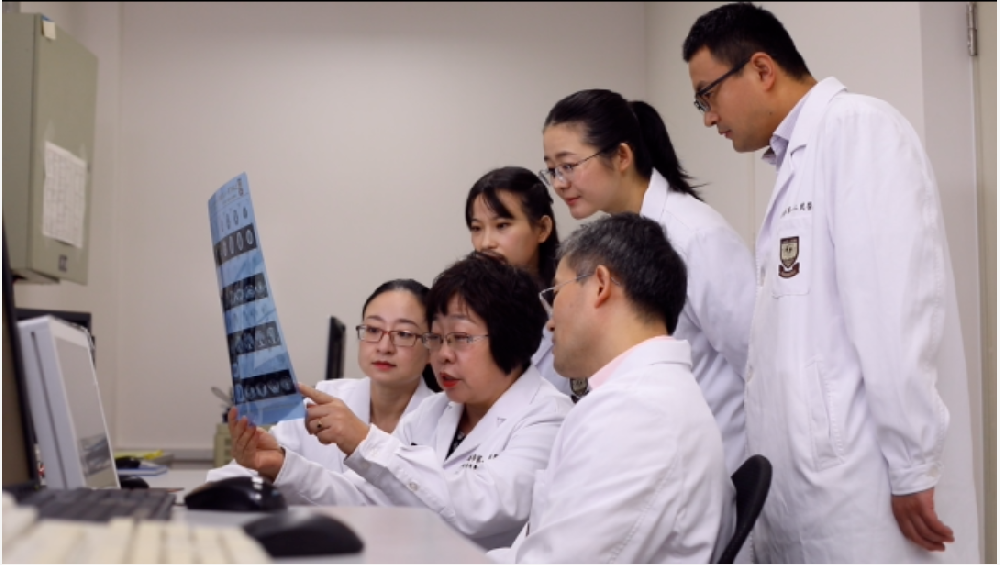
Dr. Zhao Jinhua | Nuclear Medicine, and the Flowers Along the Road
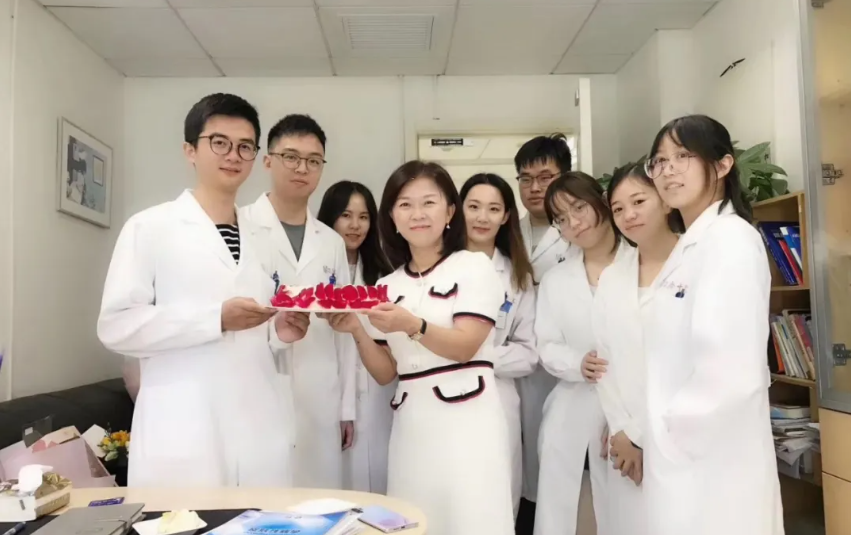
Dr. Shi Yuling | Psoriasis, and Spring Mountains Beyond the Plain
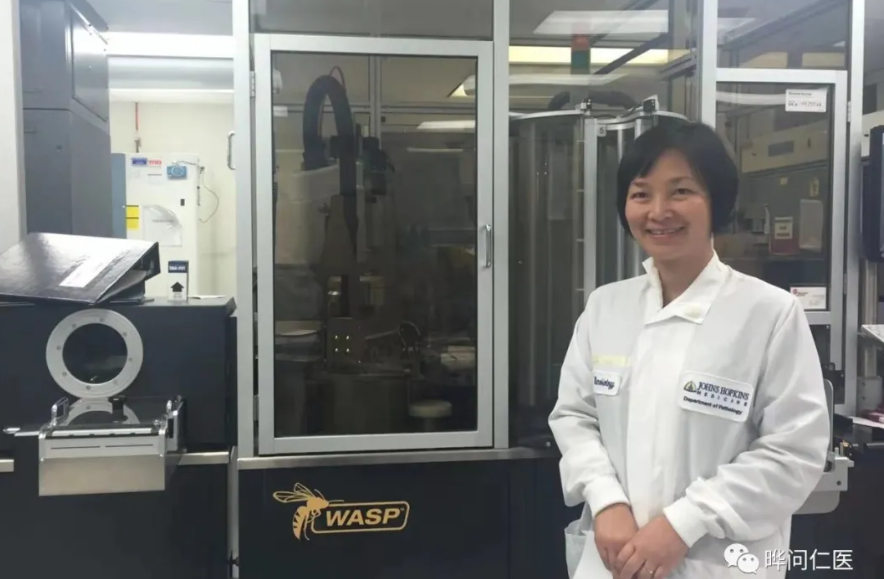
Dr.Ying Chunmei | Laboratory Medicine, Renewed a Little Every Day
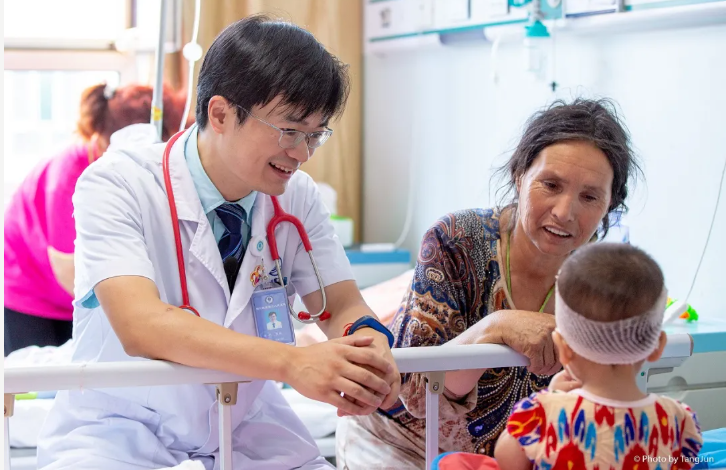
Dr. Zhang Lei | Children's Airways, and a Preference for Being Plain
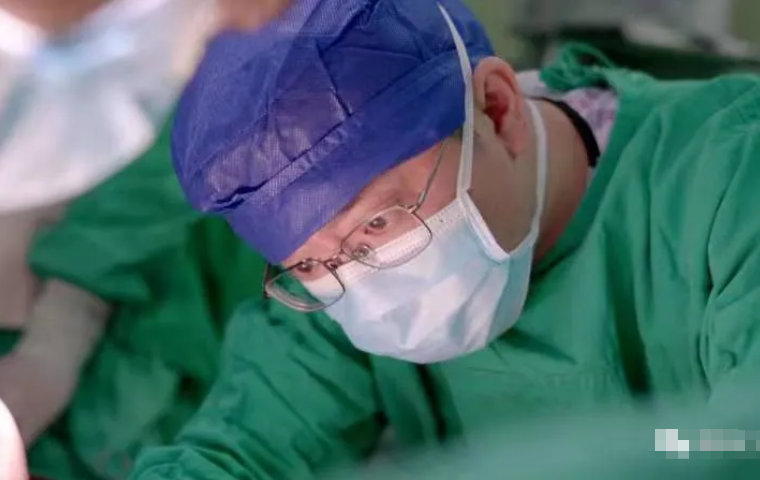
Dr. Chen Tongyu | Chest Surgery Without a Tube, and No Claim to Greatness
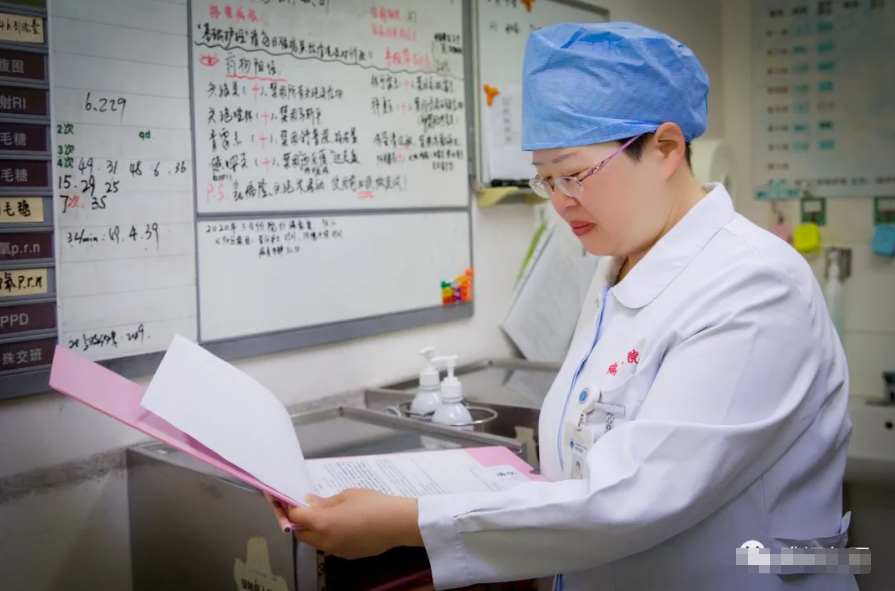
Cui Jie | An Infectious-Disease Nurse Who Kept Walking In
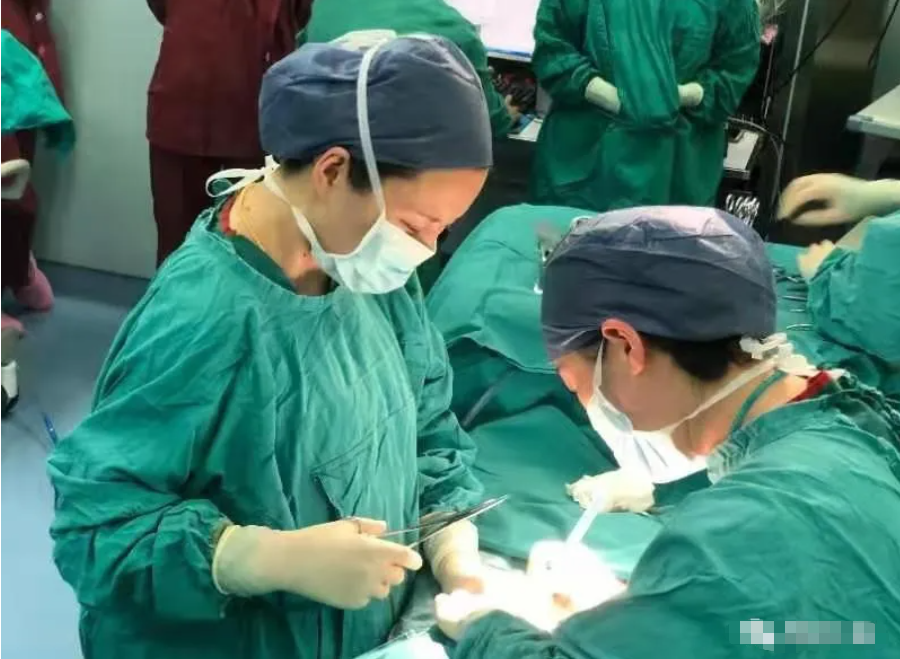
Dr. Hua Xiaolin | High-Risk Obstetrics, and a Child Worth Keeping
Copyright © 2023 Yewen Renyi & ShanghaiDoctor.cn (This website is a non - profit medical humanities platform. The information contained herein is solely for biographical and historical purposes and does not constitute any medical advice.) 沪ICP备2023005392号-2 XML 沪公网安备31010902100835号
 中文
中文 English
 Español
 沪公网安备31010902100835号