ShanghaiDoctor - Where China's Healing Wisdom Shapes Modern Medicine

Update time:2026-08-09Visits:3861
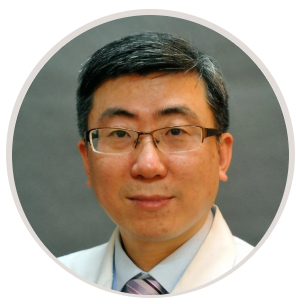
Director & Chief Physician Department of Ultrasound Medicine Renji Hospital, Shanghai Jiao Tong University School of Medicine Doctoral Supervisor
“The body is like colored glass, clear and lucid within and without.”
— A traditional image of purity and transparency that Jiang Lixin often invokes for the ideal of medical practice
Jiang Lixin is Director and Chief Physician of the Department of Ultrasound Medicine at Renji Hospital, Shanghai Jiao Tong University School of Medicine, and a doctoral supervisor. His clinical and research work spans abdominal ultrasound, sports-medicine (musculoskeletal) ultrasound, obstetric and gynecologic ultrasound, and high-intensity focused ultrasound (HIFU) therapy for tumors.
He holds multiple academic appointments, including membership on the Tenth Committee of the Ultrasound Medicine Branch of the Shanghai Medical Association and deputy head of its Superficial Masses Group; membership in the Interventional Group of the Ultrasound Branch of the Chinese Medical Association; Vice Chairman of the First Committee on Tumor Ultrasound Therapy of the Chinese Anti-Cancer Association; Vice Chairman of the Focused Ultrasound Committee of the National Tumor Minimally Invasive Therapy Industry Technology Innovation Strategic Alliance; and Vice Chairman of the Therapeutic Ultrasound Committee of the Ultrasound Equipment Technology Branch of the China Medical Equipment Association.
He serves on the editorial boards of the Chinese Journal of Ultrasonography, Technical Acoustics, the Chinese Journal of Clinical Medical Imaging, and the Chinese Journal of Medical Imaging Technology. He is a recognized review expert for the Ministry of Education Awards, the China Postdoctoral Innovation Fund, the National Natural Science Foundation of China, and key projects of the Shanghai Municipal Science and Technology Commission.
He has authored one monograph as lead editor and one as deputy editor, contributed to seven additional monographs, holds two patents, has led two General Program projects under the National Natural Science Foundation, and has undertaken seven provincial, ministerial, and university-level projects. His publication record includes 35 papers, of which 15 are indexed in SCI, 2 in EI, and 18 in Chinese core journals.
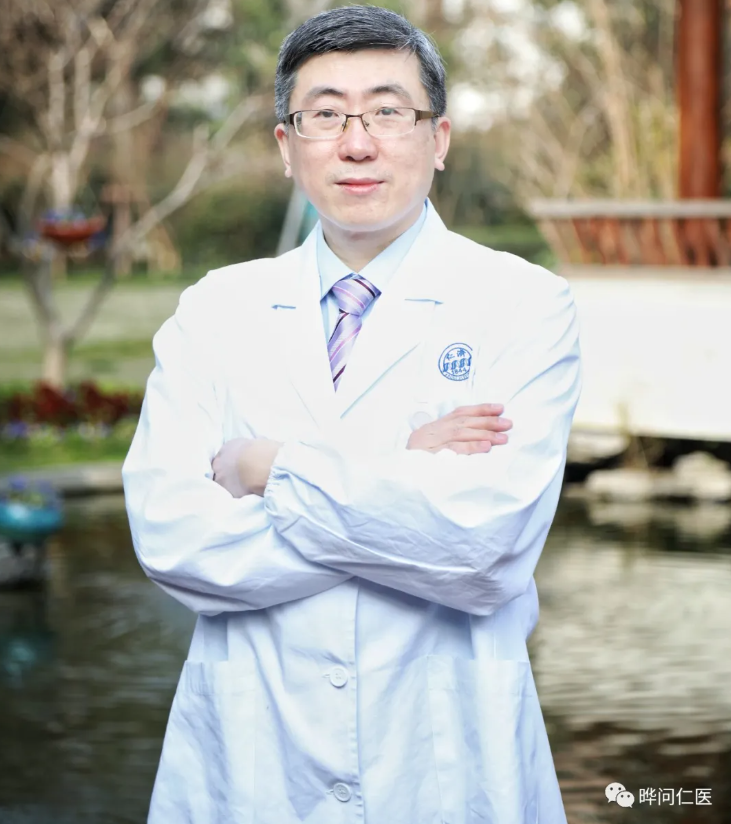
Jiang Lixin was born in 1974 in Zibo, Shandong Province, a city with deep historical roots in Qi culture. He grew up hearing stories of figures such as Jiang Ziya and the writer Pu Songling, and carried a quiet pride in that heritage. A strong student with a passion for sports—main attacker on the school volleyball team, forward on the basketball team, and nicknamed the “Three-Point King”—he chose medicine and was admitted to the clinical-medicine program at Weifang Medical University.
After graduating in 1997 he was assigned to the Third People’s Hospital of Zibo, only a ten-minute walk from home. Celebrating what seemed a fortunate placement, he was then told without warning to report to the Ultrasound Department. The news felt like a bucket of ice water. A senior classmate had earlier been assigned to imaging and returned full of complaints; Jiang had never imagined the same fate. He knew nothing about ultrasound and had no interest in it.
That afternoon he rode his bicycle aimlessly around town under harsh sunlight, feeling only gloom. He decided to “scout” the department; if it felt wrong he would prepare for the postgraduate entrance examination. During that reconnaissance he met the department director. Looking back, Jiang regards that conversation as the turning point of his career. The director spoke with sincerity about the prospects of ultrasound medicine and expressed genuine appreciation for the young graduate. Jiang stayed.
The first three years were formative. The director taught image acquisition and report writing meticulously. Within three months Jiang was examining patients independently. Night shifts tested him hardest: ectopic pregnancy, ureteral stones, placental abruption—cases arrived in rapid succession, and he spent entire nights without sleep, cold sweat on his back, yet fully alert. The hospital’s strengths in obstetrics, gynecology and pediatrics gave him broad exposure to abdominal, pediatric and anomaly-screening ultrasound. His mentor insisted on rigorous follow-up: every positive case was recorded on videotape, and surgical or pathological correlation was checked in the ward. Those habits of precision and verification became lifelong.
Seeking further growth, Jiang later worked in Fujian under a meticulous mentor who refined his technique for liver, gallbladder, pancreas, spleen and kidney imaging—the 15-degree probe tilt for the pancreas, the method of tracing the common bile duct to its distal end, the visualization of masses near the diaphragmatic dome. He arrived at the department at seven each morning, prepared the equipment, assisted with clinics, performed examinations and interventions, and returned to the literature in the evenings. Living on the hospital grounds, he would hurry back at midnight whenever an emergency required ultrasound. A northerner still adjusting to southern language and food, he simply buried himself in work.
In 2003 he was admitted as a doctoral student under Professor Hu Bing, then director of the Department of Ultrasound Medicine at Shanghai Sixth People’s Hospital—long regarded as the birthplace of ultrasound diagnosis in China. Shortly after arrival, Professor Hu assigned him a demanding research topic centered on high-intensity focused ultrasound (HIFU) equipment. HIFU uses precise ultrasound positioning and focused high-intensity energy to destroy tumor tissue while sparing surrounding normal structures—an elegant form of minimally invasive therapy.
The work was largely engineering-oriented, involving thermal-field visualization. Jiang, trained as a clinician rather than an engineer, had to force himself into unfamiliar territory. “It was truly miserable,” he recalls, “but I eventually produced results. I think my adaptability is truly very strong.” Those three years transformed him from a pure user of equipment into someone who understood machine research and development and the core value of the technology. He later became deputy head of the HIFU Quality Control Group of the Shanghai Medical Association.
After completing his Ph.D. in 2007 he was assigned to the obstetrics-and-gynecology ultrasound team. Transvaginal ultrasound presented a particular challenge: as a male physician he sometimes met patient hesitation. Professor Hu encouraged him with a simple principle: many of the country’s most renowned obstetricians and gynecologists are men; either do not do the work, or become the best at it. Jiang reset his mindset. In obstetrics a single examination carries two lives; any error can be irreparable. Intensive training followed—capturing countless images, consulting on complex cases, verifying diagnoses in the operating room. Over time his diagnostic precision earned consistent trust from the clinical side, a validation that brought deep professional satisfaction.
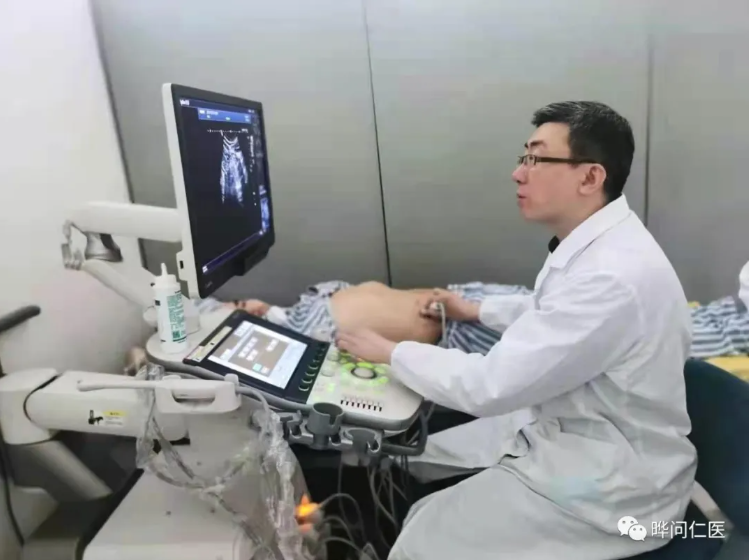
In 2014, facing a shortage of specialists in musculoskeletal ultrasound, Professor Hu asked Jiang to redirect part of his focus toward sports injuries and rheumatic immunology. The modality’s greatest strength is dynamic examination; it also serves patients who cannot tolerate MRI—those with claustrophobia or with metal implants such as dental work or cardiac stents. The greatest difficulty lies in mastering fine local anatomy that textbooks often omit. Ultrasound can resolve structures of one to two millimeters; identifying them precisely requires constant consultation with clinicians and review of the literature.
Jiang’s distinctive strength is analytical thinking. When he sees an abnormal fetal-cardiac image, he immediately searches for the underlying story—why the defect exists, what anatomical or hemodynamic explanation accounts for it. Many ultrasound practitioners remain trapped in the habit of simply “looking at images and describing them.” He prefers to start from pathology and move step by step toward the truth of the image. That process of critical inquiry is what he most enjoys.
In July 2020 Renji Hospital invited Jiang to serve as director of its Department of Ultrasound Medicine—one of the earliest ultrasound departments in China, founded in 1959, and now a national key clinical specialty. Compared with the more dominant ultrasound department at Sixth People’s Hospital, Renji’s program still had substantial room for growth.
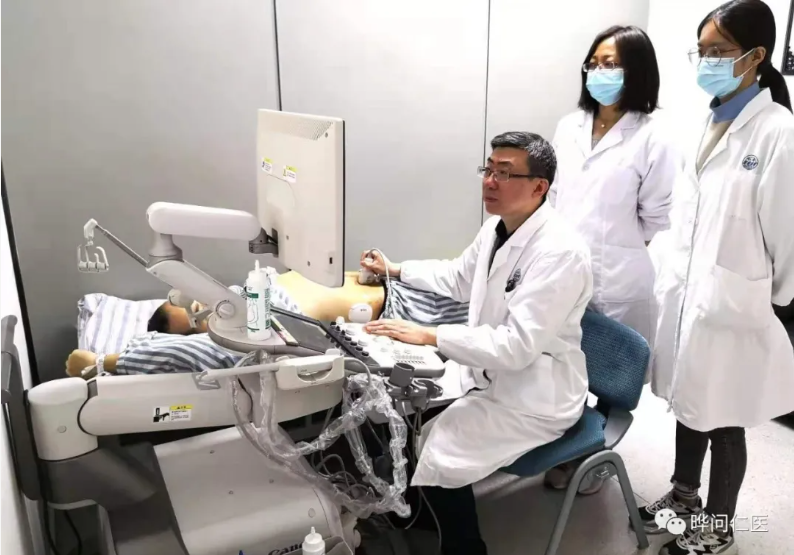
Jiang’s first priority was sub-specialty development. He reorganized existing groups and added targeted new ones—urogenital, vascular and metabolic, musculoskeletal and neurological, and gastrointestinal ultrasound—each with a group leader and deputy. Within the hospital he introduced new technologies through lectures and outreach to endocrinology, rheumatology and orthopedics, emphasizing what ultrasound can offer clinical partners. An ultrasound examination room was established inside the urology outpatient area so patients could complete studies beside the clinic, streamlining workflow.
His two guiding principles are stability—carrying forward fine traditions—and optimization, pursued through three channels: refining processes to reduce waiting times so patients can be examined promptly; deepening collaboration with clinical departments; and elevating diagnostic quality. On the first Wednesday evening of every month the department holds a professional study session that reviews misdiagnosed and missed cases. Colleagues who had not experienced such rigorous discussion for a long time described feeling “like elementary-school students again.” Jiang regards the regular practice as essential to both departmental and disciplinary growth.
He often cites a maxim attributed to the pioneering ultrasound expert Zhou Yongchang: always think a little more than others, do a little more than others, and see a little more than others. That standard of quiet surplus effort has guided his own steady accumulation into a well-rounded professional.

ShanghaiDoctor.cn: Director Jiang, you trained in clinical medicine but ended up in ultrasound—do you ever regret that path?
Jiang Lixin: To be honest, there is some regret. But my clinical background has proven invaluable. When I recruit graduate students I now actively seek out those with clinical training—if you hold on to the mindset of a purely image-reading ultrasound physician, you won’t be able to truly communicate with clinicians. They reason from a clinical perspective; you’re thinking in terms of image interpretation. That’s why I’ve never seen myself simply as an ultrasound-department doctor. An ultrasound physician must also possess clinical thinking and clinical experience—it can’t just be “reading images.”
ShanghaiDoctor.cn: As the head of the discipline, what plans do you have going forward?
Jiang Lixin: A discipline leader is not quite the same as a department manager—the growth of a discipline calls for long-term vision. Looking ahead, the ideal talent structure for Renji’s Ultrasound Department would be one or two doctoral supervisors, four or five master’s supervisors, and four or five signature specialty sub-fields—such as male reproductive ultrasound, musculoskeletal and neurological ultrasound, and organ-transplant ultrasound. We would create favorable conditions in clinical service, teaching, and research, and build a stronger platform for the discipline.
ShanghaiDoctor.cn: As an ultrasound physician, what kind of image do you consider “the most beautiful” to produce?
Jiang Lixin: Ultrasound images have their own aesthetic. First, there must be a golden ratio. I tell my graduate students that once you produce an image, it should look like it’s ready to go to print (laughs). Second, with the very same image, one person’s output can look flat and rigid, while another’s looks vividly three-dimensional. The blood-flow signal must be neither excessive nor insufficient—it must perfectly complement the two-dimensional image. That depends on the examiner adjusting the machine to each patient’s condition and optimizing the equipment settings. The examiner must unite hand, mind, and machine into one. Only with the machine properly calibrated and good scanning technique can the resulting image be called “the most beautiful.”
ShanghaiDoctor.cn: So what should the training of an ultrasound physician look like?
Jiang Lixin: Let me use an analogy. My hometown is Zibo. Zibo’s colored glass—carved by master artisans with dragons and phoenixes, coiling chi dragons—comes in countless varieties, deep and exquisitely translucent. When I was home I loved collecting fine pieces: snuff bottles, desk ornaments, glass figurines. The craftsmen who make these pieces have a hard life of it; the success rate of their work is often very low. And yet many artisans let their minds drift with circumstances. Through the reflection and tempering of the glass, when all the splendor fades away, what remains is true simplicity—and they find the original home of their lives.
A traditional saying holds that the body is like colored glass, clear and lucid within and without. No matter the profession—doctor, gardener, or craftsman—one can be forged in the fierce flames and become impervious to all poisons.
From a reluctant assignment to ultrasound in a provincial hospital, through rigorous mentorship, HIFU research, the challenges of obstetric imaging, the expansion into musculoskeletal ultrasound, and the leadership of a historic department at Renji, Jiang Lixin has pursued a single standard: think a little more, do a little more, see a little more. The ideal remains the same—images and practice that are clear, precise, and transparent through and through.
Editor: Chen Qing
If you need any help from Dr. Jiang, please be free to let us know at Chenqing@ShanghaiDoctor.cn.
Dr. Shi Yuling | Psoriasis, and Spring Mountains Beyond the Plain
Dr.Ying Chunmei | Laboratory Medicine, Renewed a Little Every Day
Dr. Zhang Lei | Children's Airways, and a Preference for Being Plain
Dr. Chen Tongyu | Chest Surgery Without a Tube, and No Claim to Greatness
Dr. Hua Xiaolin | High-Risk Obstetrics, and a Child Worth Keeping
Dr. Shen Chun | Neonatal Surgery, and a Vow That Makes No Speech
Dr. Yang Ji | A Dermatologist Who Measures the Years by Who Gets Better
Dr. Chen Gong | Children's Bile Ducts, and a Future He Chose Himself
Dr. Luo Zhiguo | An Oncologist Still Hoping for One More Reunion
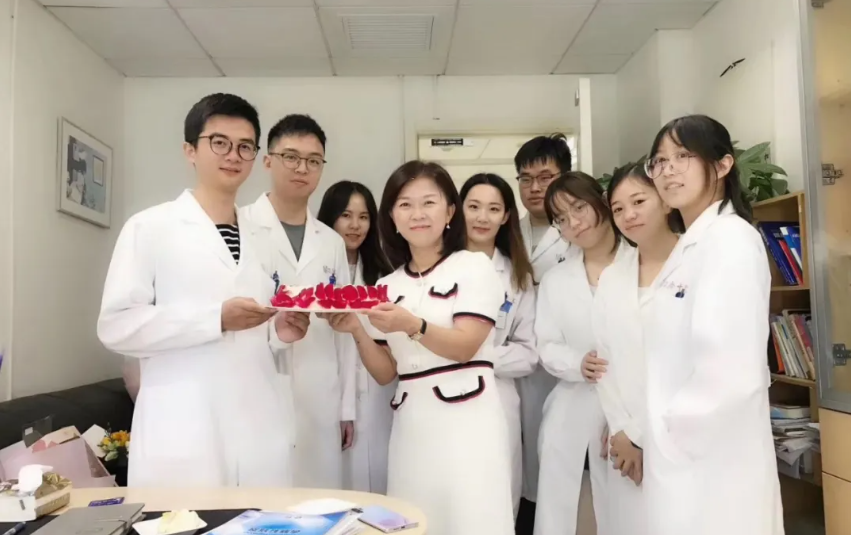
Dr. Shi Yuling | Psoriasis, and Spring Mountains Beyond the Plain
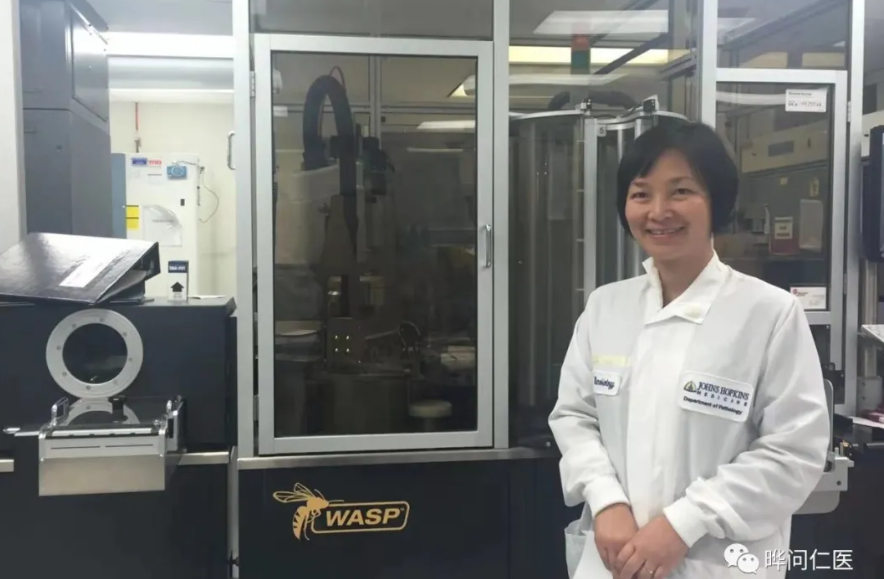
Dr.Ying Chunmei | Laboratory Medicine, Renewed a Little Every Day
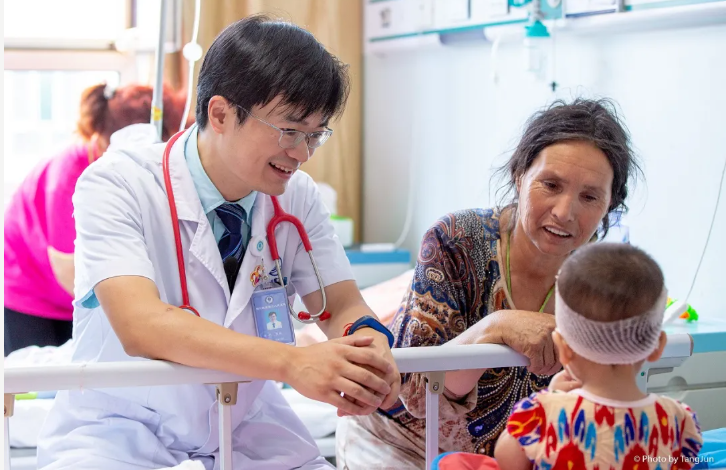
Dr. Zhang Lei | Children's Airways, and a Preference for Being Plain
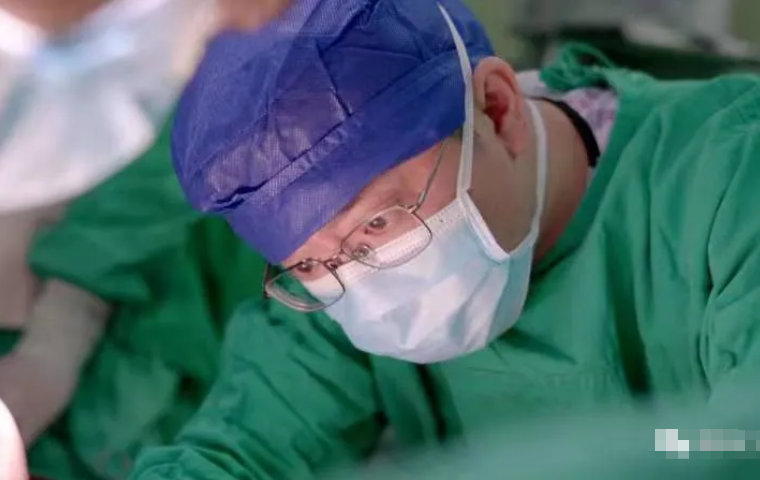
Dr. Chen Tongyu | Chest Surgery Without a Tube, and No Claim to Greatness
Cui Jie | An Infectious-Disease Nurse Who Kept Walking In
Dr. Hua Xiaolin | High-Risk Obstetrics, and a Child Worth Keeping
Dr. Shen Chun | Neonatal Surgery, and a Vow That Makes No Speech
Dr. Yang Ji | A Dermatologist Who Measures the Years by Who Gets Better
Dr. Chen Gong | Children's Bile Ducts, and a Future He Chose Himself
Dr. Luo Zhiguo | An Oncologist Still Hoping for One More Reunion
Copyright © 2023 Yewen Renyi & ShanghaiDoctor.cn (This website is a non - profit medical humanities platform. The information contained herein is solely for biographical and historical purposes and does not constitute any medical advice.) 沪ICP备2023005392号-2 XML 沪公网安备31010902100835号
 中文
中文 English
 Español
 沪公网安备31010902100835号